





Circular Economy Consulting
Promoting innovation and transforming processes with Circularity Consulting
Companies are under increasing ecological and economic pressure to ensure their competitiveness through sustainable practices. However, measures are often only taken due to legal requirements. Individual sustainability initiatives often fall short – only a holistic circular economy strategy unfolds the full potential to exploit synergies and create sustainable processes. Our Circularity Consulting supports you in designing products for multiple life cycles from the outset and transforms your processes to be sustainable and future-proof. We show you how companies can respond proactively rather than reactively to the opportunities of the circular economy in order to increase their resilience and independence.
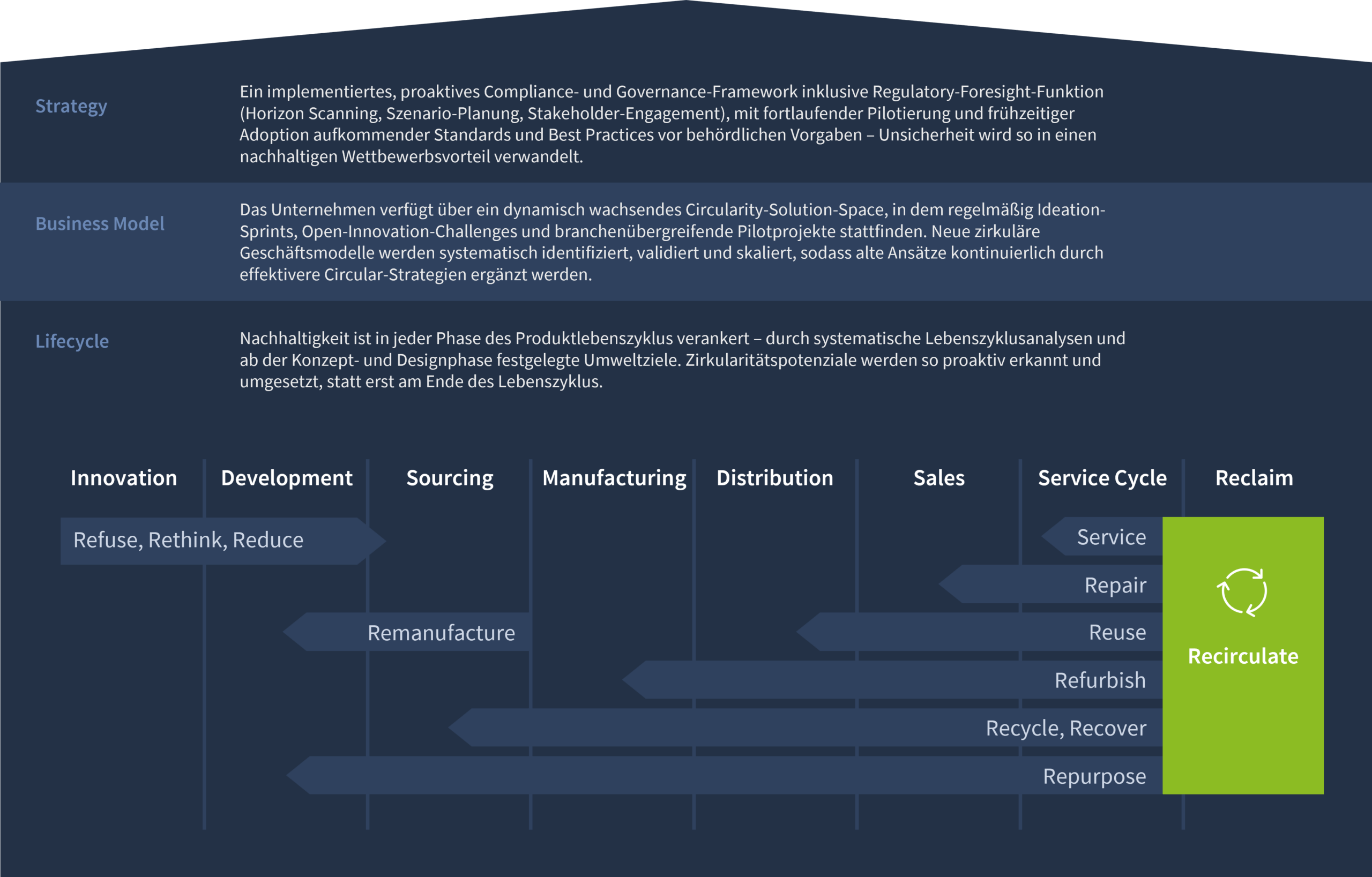
The Ventum Circular Economy Framework is the foundation of our consulting services. It integrates the view of the business model with the strategy and the product life cycle to create an integrated approach. In this way, sustainability can be measurably anchored and regulatory requirements can be translated into competitive advantages.
Our services for sustainability consulting in product processes
Circularity Strategy & Governance
- Product management over several life cycles to ensure sustainable use of the product over its first life.
- Fulfillment of compliance guidelines through the integration of effective sustainability requirements.
- Establishment and management of overarching initiatives to promote circularity throughout the company.
Circular Product Development
The development of circular products is the key to a sustainable future. We support your product development organization in developing products that leave a smaller environmental footprint with each generation.
- Processes for material health checks to ensure that the materials used are sustainable and recyclable.
- Rollout of design-for-reuse methods to create products that can be used multiple times up to the end of use.
- Concepts for the promotion of sustainable product design.
- Cooperation with suppliers and partners to leverage the strengths of your organization and products with those of others.
Circular product life cycle
The circular product life cycle is the foundation of a sustainable economy. We support you in closing this cycle and minimizing the consumption of resources.
- Optimization of the entire product life cycle management from the design phase to use and recycling.
- Looking at the cycle beyond your existing boundaries to identify potential.
Digitalization & PLM/PDM
Digitalization is key to being able to manage sustainability efficiently. We use modern tools and systems to help you integrate sustainability into your product processes.
- Implementation of digital product passports to document the sustainability of a product over its entire life cycle.
- Use of PLM and PDM systems to capture and manage sustainable product data.
- Support with the introduction of software solutions that optimize the cycle of products and materials.
- Introduction of MBSE for the management of complex products, coupled with the challenges of market access and the development of necessary views of the product.
Digital twin
- Integration of digital twins to optimize development and production processes.
- Ability to simulate product life cycles and identify optimization potential.
- Supporting the development and use of digital twins to improve resource efficiency and minimize waste.
Process & Interface Management
- Analysis and optimization of your business processes with a focus on sustainability.
- Integration of circularity initiatives into existing interfaces and systems.
- Improving efficiency and reducing waste through targeted process optimization.
Business model transformation
A successful transformation to a circular model goes beyond product development. An important step on the way to a circular economy is to change your business model sustainably.
- Establishing partnerships and cooperations to exploit synergies along the value chain.
- Use of existing interfaces to ensure efficient and cost-effective implementation of circularity initiatives.
- Standardization of processes to establish circular practices across the industry.
Circularity Consulting generates this impact
Cost reduction
Competitive advantage
Increased resilience
Innovation and value creation
Better compliance and risk reduction
Improved customer loyalty
Your experts for circular economy consulting

Use cases for the circular economy
The circular economy opens up a wide range of opportunities to rethink products and use resources more efficiently. The following use cases show how companies can create concrete added value through innovative approaches and reduce their ecological impact at the same time.
The use of second-life batteries in backup solutions offers great potential for extending the service life of batteries. For example, batteries that have reached their peak performance in electric vehicles or other applications can be reused for backup solutions in areas such as grid stabilization or emergency power supply (e.g. for hospitals or remote locations). The key to success lies in partnerships and a common digital twin to analyze the data of used batteries and evaluate their performance and optimize them for further use.
The reuse of smartphone components, such as speakers, metal frames and connection modules, is a sustainable solution for conserving resources and reducing electronic waste. Through partnerships with third-party providers and the remanufacturing of original parts, the service life of smartphones can be extended in this way. In addition, valuable materials can be recovered and used for new products, reducing the need for new raw materials.
Circularity in the textile industry can be implemented by recycling old clothes and waste materials into new fibers or upholstery materials for car seats or furniture. Companies can introduce take-back and recycling programs where old clothing is reused in a closed-loop system to create new products. Rethinking the use of materials and working with partners in the circular system makes it possible to produce textiles sustainably and significantly reduce waste.
Our key values in consulting for the circular economy

Impact
We create results that make a lasting difference. With our many years of experience and proven best practices, our aim is to exceed expectations.

Eye level
Our cooperation is based on trust and respect. We treat our customers with respect as equals and build long-term relationships.

Go beyond
Our approach transcends the boundaries of individual project topics. We combine strategy, business, IT and people into a single unit to ensure sustainable success.
The 4 phases to a circular economy - maturity assessment
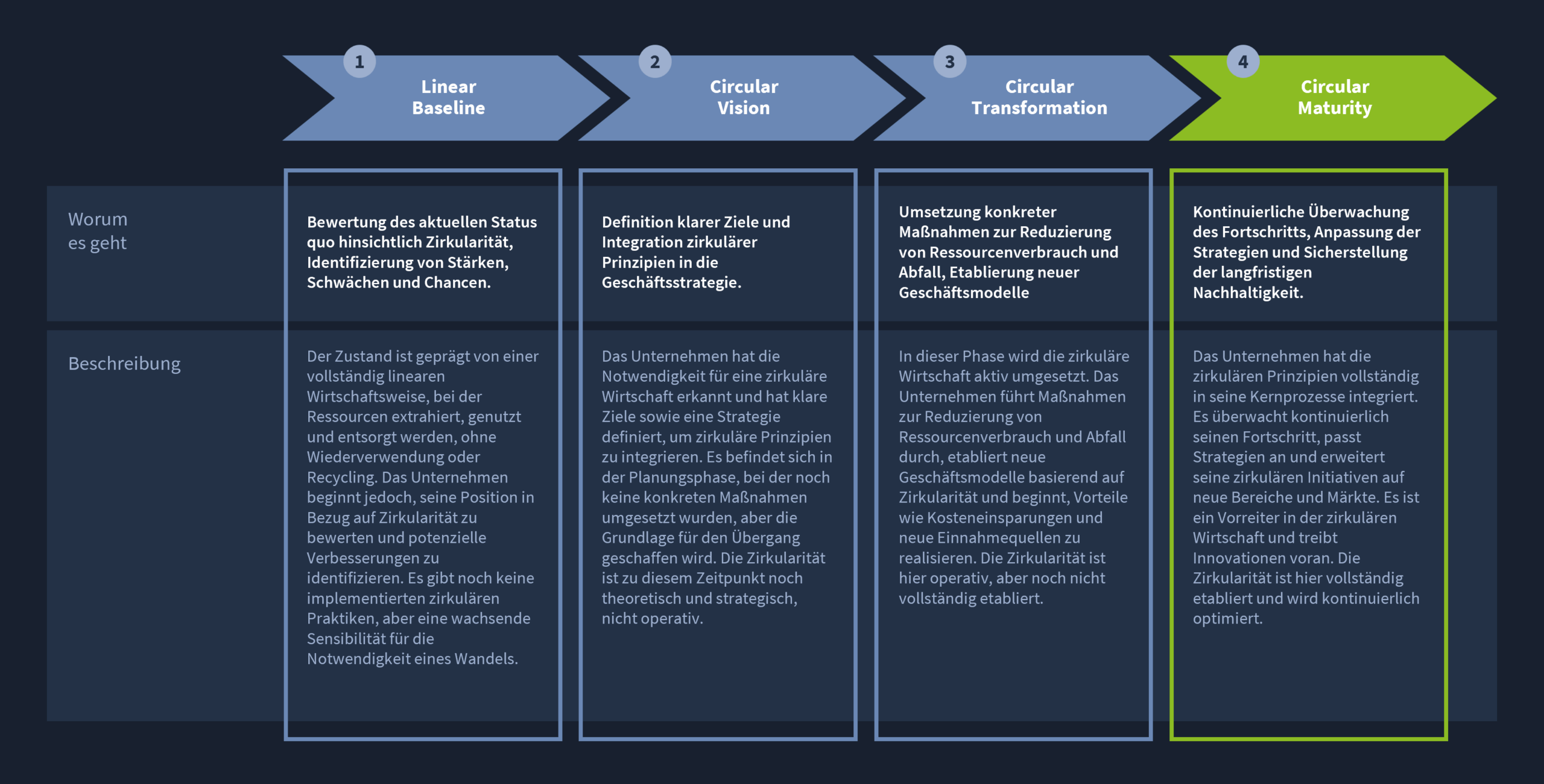
The maturity assessment shows where a company stands on the path from linear value creation to a circular economy. The status quo, typical challenges, impact and key tasks are described based on four phases – from the pure baseline to circular maturity in practice. Each stage illustrates the steps required to reach the next level of maturity.
We understand the phases that a company goes through on the way to the circular economy. We accompany this process from the initial assessment to the complete establishment of circular practices – and support each phase with experience, methods and individual solutions.
Linear baseline
Tasks
Determination of the status quo with regard to circularity, analysis of the current value chain and identification of initial potential for improvement.
Description
The company is still in a linear process: resources are extracted, used and disposed of – without reuse or recycling. There is an initial awareness of sustainability, but concrete measures are lacking. The aim of this phase is to create transparency and define a starting point for the transformation.
Advantages
- Clear view of strengths, weaknesses and opportunities
- Awareness of the need for change is growing
- Initial orientation for strategic sustainability goals
Prerequisite for the next level of maturity
Development of a comprehensive circular strategy that encompasses the relevant areas of the company.
Circular Vision
Tasks
Definition of clear objectives, integration of circular principles into the corporate strategy and development of an implementation plan.
Description
The company recognizes the need for a circular economy and formulates concrete goals. A strategy for integrating circular principles is developed, but remains at the planning and strategy level at this stage. Operational implementation has not yet taken place.
Advantages
- Clear focus on the aspects of circularity that are effective for the company
- Strategic embedding in the business model
- Creating orientation and commitment for the next steps
Prerequisite for the next maturity level
Development of a detailed action plan with timetables, responsibilities and resource requirements.
Circular Transformation
Tasks
Implementation of specific measures to reduce resource consumption and waste, introduction of new business models if necessary, establishment of monitoring.
Description
The company begins to actively implement R strategies. Initial measures are established along the focused aspects. New business models can be established in parallel. Initial benefits such as cost savings and additional sources of income become visible, but the highest expansion level is not yet fully established.
Advantages
- Visible progress towards circularity
- Initial economic impact can be assessed
- Positioning as a pioneer in the industry begins
Prerequisite for the next level of maturity
Establishment of robust monitoring systems and key figures to make progress measurable and prepare for scaling.
Circular Maturity
Tasks
Continuous monitoring, adjustment and optimization of strategies and processes, establishment of circular in other core processes.
Description
The company has firmly integrated circular principles. Progress is systematically monitored, strategies are flexibly adapted and circular practices are extended to new areas and markets. The company acts as an innovation leader and helps drive the further development of the industry.
Advantages
- Sustainability becomes an integral part of the DNA
- Competitive advantage through innovation leadership
- Maximum transparency thanks to established monitoring and controlling systems
- Resilience to regulatory requirements
Final step to becoming a Circular Economy Leader
Consolidation of circular practices and scaling to other business areas and markets.
Linear baseline
Circular Vision
Circular Transformation
Circular Maturity
Tasks
Determination of the status quo with regard to circularity, analysis of the current value chain and identification of initial potential for improvement.
Description
The company is still in a linear process: resources are extracted, used and disposed of – without reuse or recycling. There is an initial awareness of sustainability, but concrete measures are lacking. The aim of this phase is to create transparency and define a starting point for the transformation.
Advantages
- Clear view of strengths, weaknesses and opportunities
- Awareness of the need for change is growing
- Initial orientation for strategic sustainability goals
Prerequisite for the next level of maturity
Development of a comprehensive circular strategy that encompasses the relevant areas of the company.
Tasks
Definition of clear objectives, integration of circular principles into the corporate strategy and development of an implementation plan.
Description
The company recognizes the need for a circular economy and formulates concrete goals. A strategy for integrating circular principles is developed, but remains at the planning and strategy level at this stage. Operational implementation has not yet taken place.
Advantages
- Clear focus on the aspects of circularity that are effective for the company
- Strategic embedding in the business model
- Creating orientation and commitment for the next steps
Prerequisite for the next maturity level
Development of a detailed action plan with timetables, responsibilities and resource requirements.
Tasks
Implementation of specific measures to reduce resource consumption and waste, introduction of new business models if necessary, establishment of monitoring.
Description
The company begins to actively implement R strategies. Initial measures are established along the focused aspects. New business models can be established in parallel. Initial benefits such as cost savings and additional sources of income become visible, but the highest expansion level is not yet fully established.
Advantages
- Visible progress towards circularity
- Initial economic impact can be assessed
- Positioning as a pioneer in the industry begins
Prerequisite for the next level of maturity
Establishment of robust monitoring systems and key figures to make progress measurable and prepare for scaling.
Tasks
Continuous monitoring, adjustment and optimization of strategies and processes, establishment of circular in other core processes.
Description
The company has firmly integrated circular principles. Progress is systematically monitored, strategies are flexibly adapted and circular practices are extended to new areas and markets. The company acts as an innovation leader and helps drive the further development of the industry.
Advantages
- Sustainability becomes an integral part of the DNA
- Competitive advantage through innovation leadership
- Maximum transparency thanks to established monitoring and controlling systems
- Resilience to regulatory requirements
Final step to becoming a Circular Economy Leader
Consolidation of circular practices and scaling to other business areas and markets.
Circular economy vs. linear economy - what are the differences?
In a linear business, raw materials are extracted, converted into products and disposed of as waste after use, without regard to the environmental impact or recyclability of the materials. This approach leads to a continuous strain on natural resources and an increase in waste.
In contrast, the circular economy aims to minimize the environmental impact by using non-harmful materials, renewable resources and using them according to their sustainable properties. Products are designed from the outset so that they can be easily repaired, reused and recycled at the end of their life cycle. This not only reduces waste, but also optimizes the use of resources and protects the environment.
Arrange a non-binding initial consultation now
- Industry expertise: Over 20 years of practical experience from successful projects
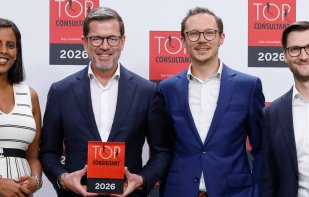
- Awarded: Top Consultant Award 2025 honored
- Integrated approach: Framework for measurable and scalable sustainability.
- Practice-oriented implementation: concrete measures for products, models and processes.

TISAX and ISO certification for the Munich office only
Your message
Related articles








Frequently asked questions about sustainable product processes
Circularity consulting supports companies in establishing sustainable circular systems by developing processes to reduce waste, reuse materials and recycle products.
It means designing business processes in such a way that products and materials are used over several life cycles, thereby reducing waste and resource consumption. It can also mean that the company focuses its processes on the development of products with sustainable use. Talk to us to find out what your potential is.
Ventum Consulting helps companies to reduce costs, increase resource efficiency and improve their competitiveness through sustainable business models.
A typical project begins with an analysis of existing processes, followed by the development and implementation of customized circularity strategies that take into account the entire life cycle of a product.
Ventum Consulting combines industry knowledge and a practical, customized approach to develop circular solutions that bring both environmental and economic benefits to the business.