









AI Tool for Requirements Engineering
AI-Powered Requirements Engineering: How to Create Reliable Requirements in Just a Few Minutes
Our AI asks precise, domain-specific questions, identifies gaps, and incorporates internal knowledge in a structured way—resulting in a clear, development-ready requirements document with acceptance criteria and test cases. Every step remains transparent and verifiable. The result: robust requirements in minutes instead of endless rounds of coordination—clear, audit-ready, and verifiable by humans at any time.
- Domain-specific precision:
The AI identifies connections, asks the right questions, and prevents gaps. - Less back-and-forth:
Requirements are largely established during the initial consultation—without endless follow-up questions. - Ready to use:
Acceptance criteria and test cases in the Given/When/Then format are generated automatically. - Transparent & Controlled:
No black box—every step is traceable and verifiable by humans. - Knowledge Preserved:
Expertise is systematically documented rather than relying on individual employees.
Highlights: Features of Our Requirements Engineering AI Tool
Unlike chatbots, templates, or traditional workshops, AI does not simply engage in random conversation; rather, it orchestrates a comprehensive analytical process: asking targeted questions, incorporating internal knowledge, identifying gaps, verifying quality, and producing an artifact ready for development.
Automatic Knowledge Enrichment
Guidelines, specifications, and previous requirements are automatically incorporated via RAG—with citations. In addition, users can upload their own documents (e.g., PDF/Word) and use them as a source of knowledge.
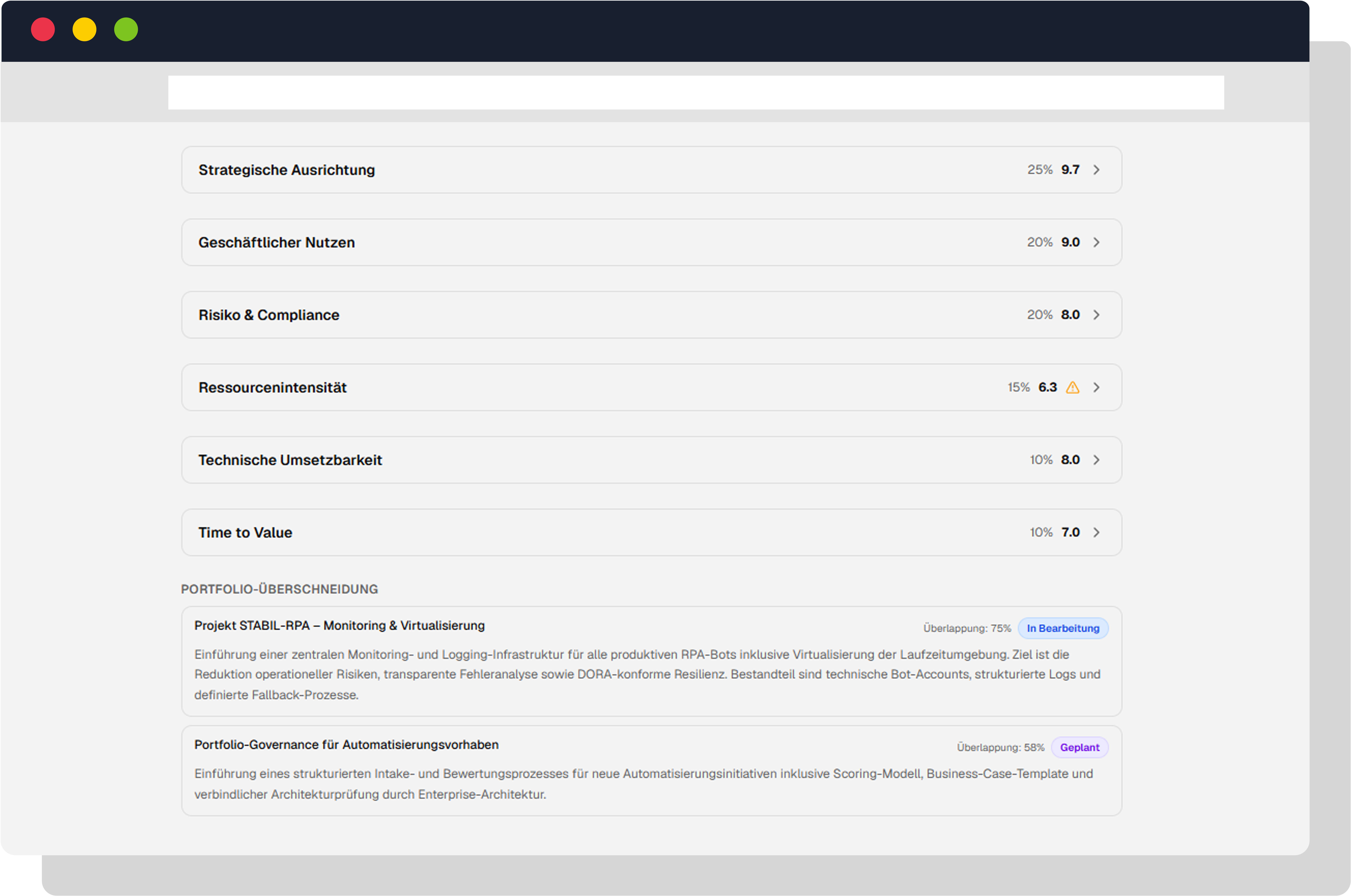
Decision-Making Dashboard & Business Case Evaluation
For decision-makers, AI consolidates the requirements for an evaluation into a weighted score, a recommendation, evidence coverage, and counterarguments—the basis for approving, postponing, or rejecting a proposal.
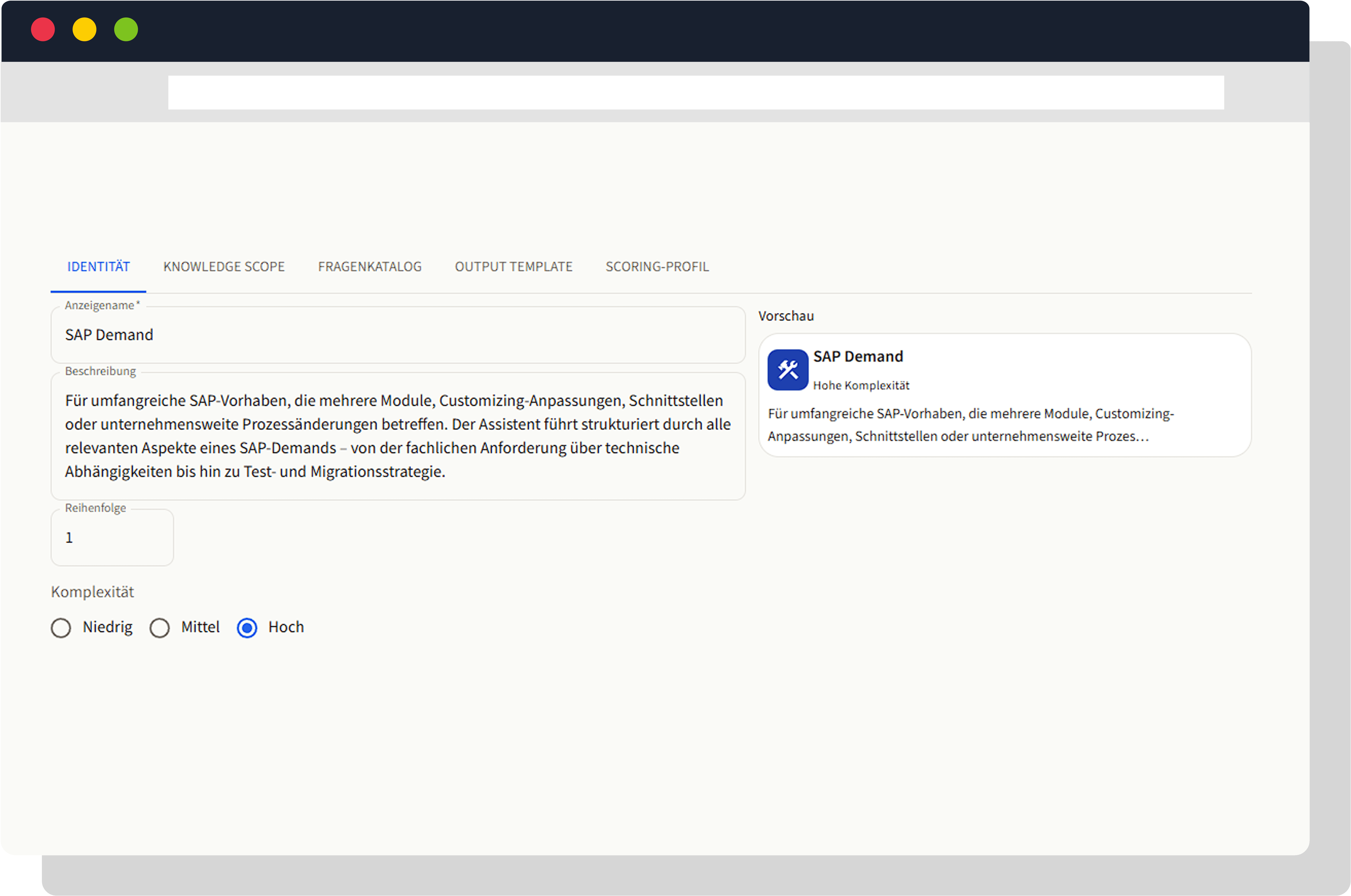
No-Code Administration
Assessment types, question sets, prompts, knowledge sources, and scoring can all be configured without coding—the tool adapts to your organization, not the other way around.
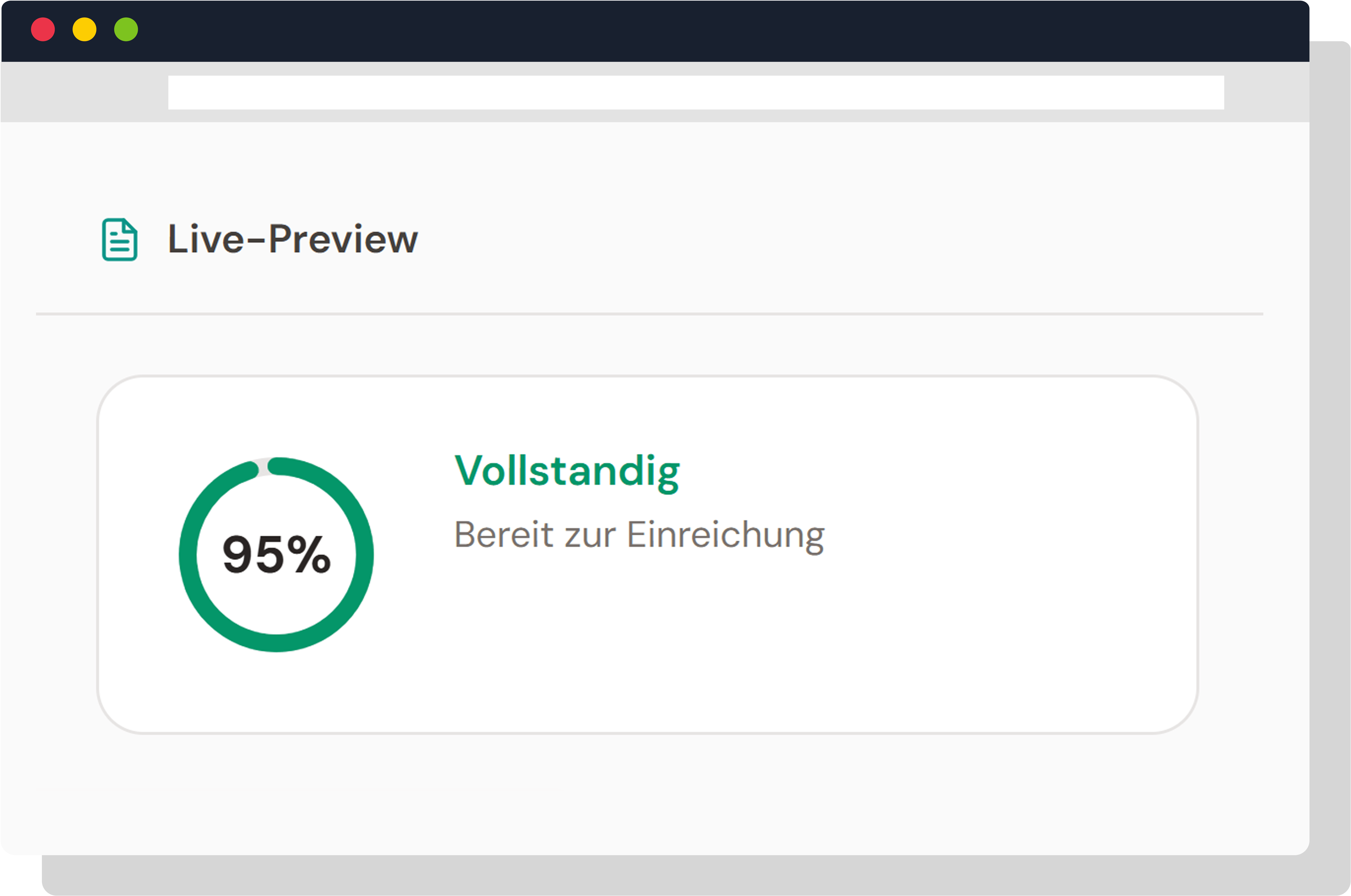
Live Quality Score
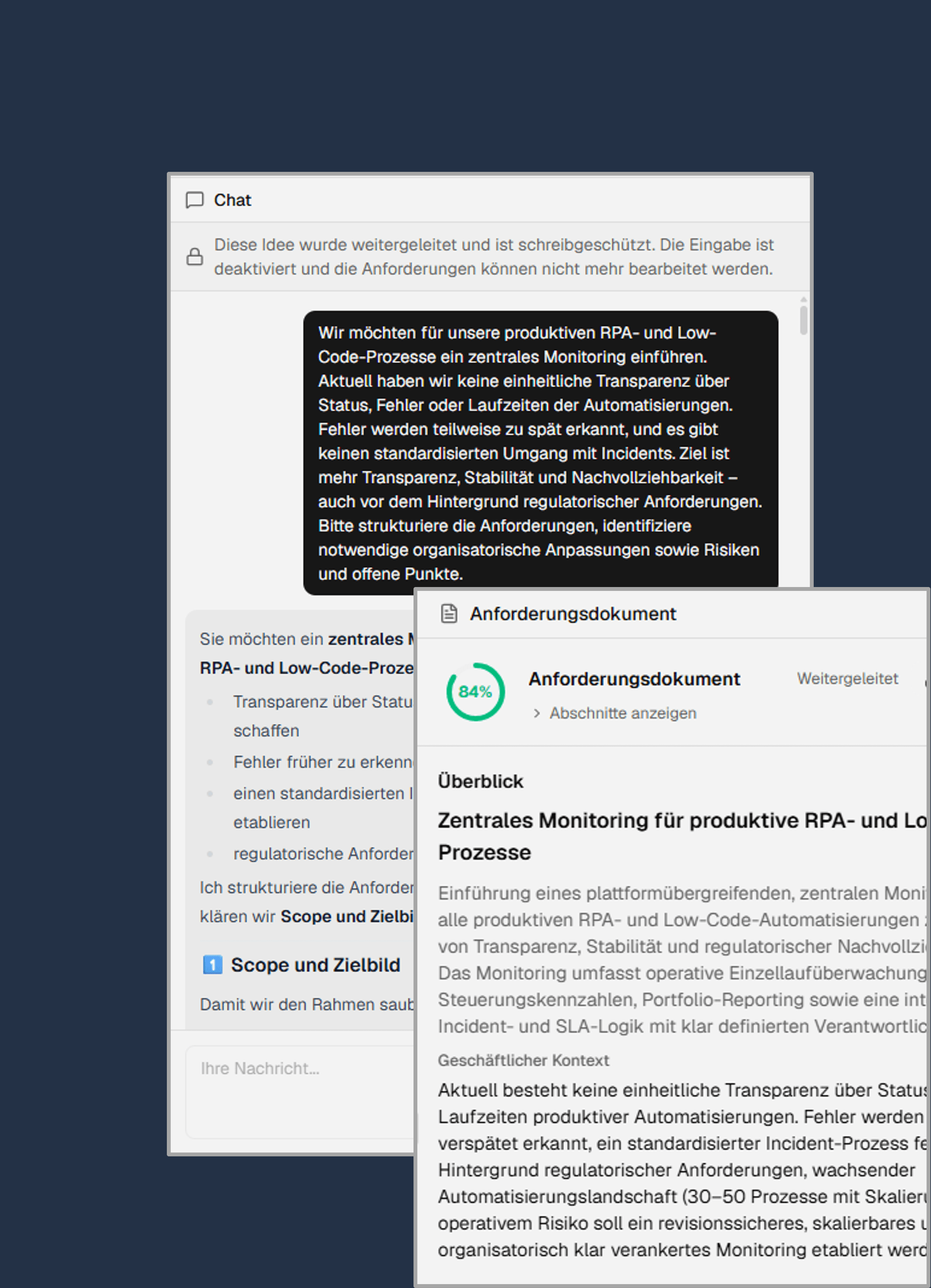
Business units and IT can immediately see whether a requirement is clear, testable, and complete—before it is forwarded. A threshold (score gate) controls whether it is forwarded.
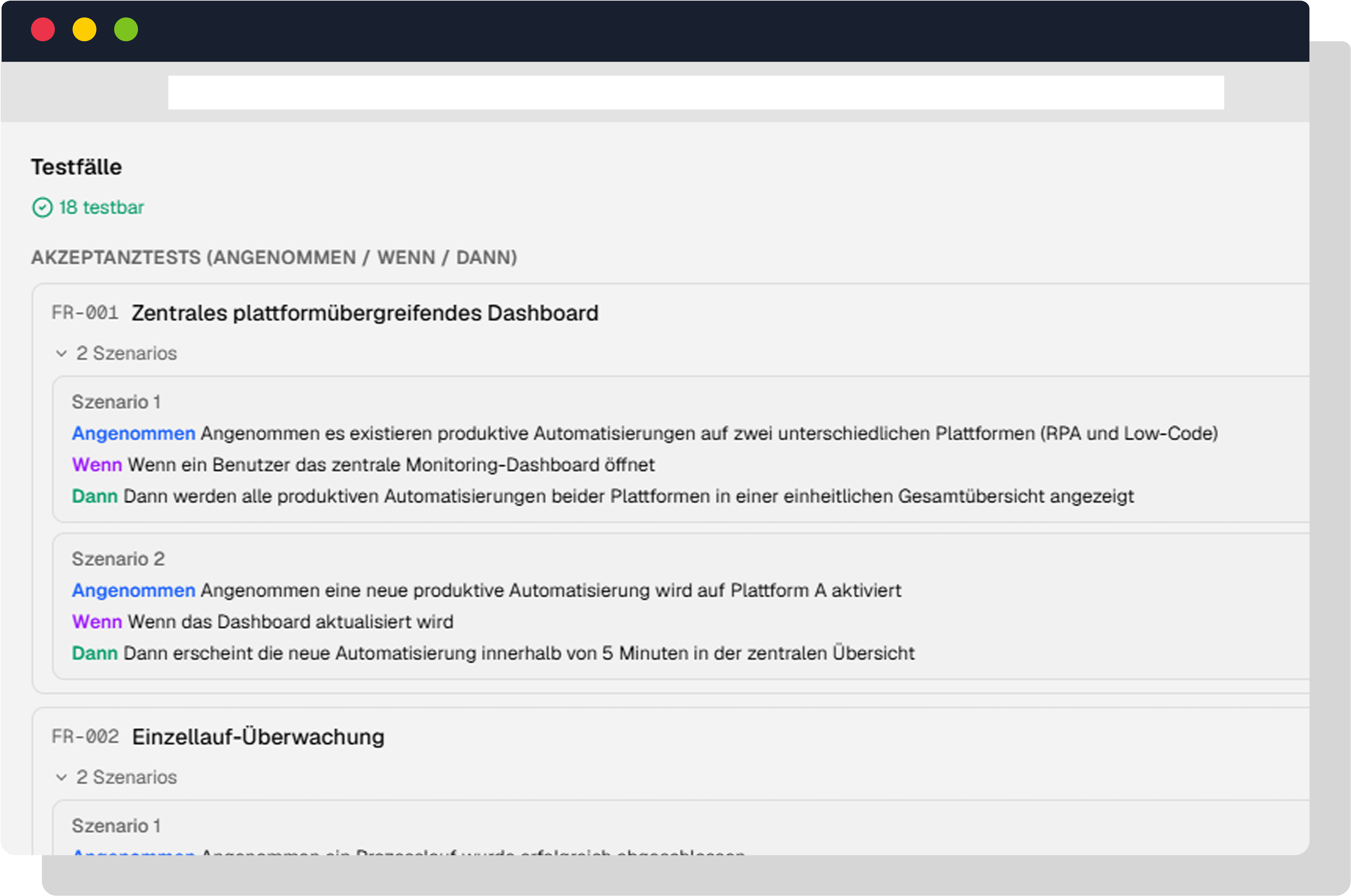
Generating Acceptance Criteria & Test Cases
The discussion results in structured acceptance criteria in the Given/When/Then format—
—that can be used immediately as test cases.
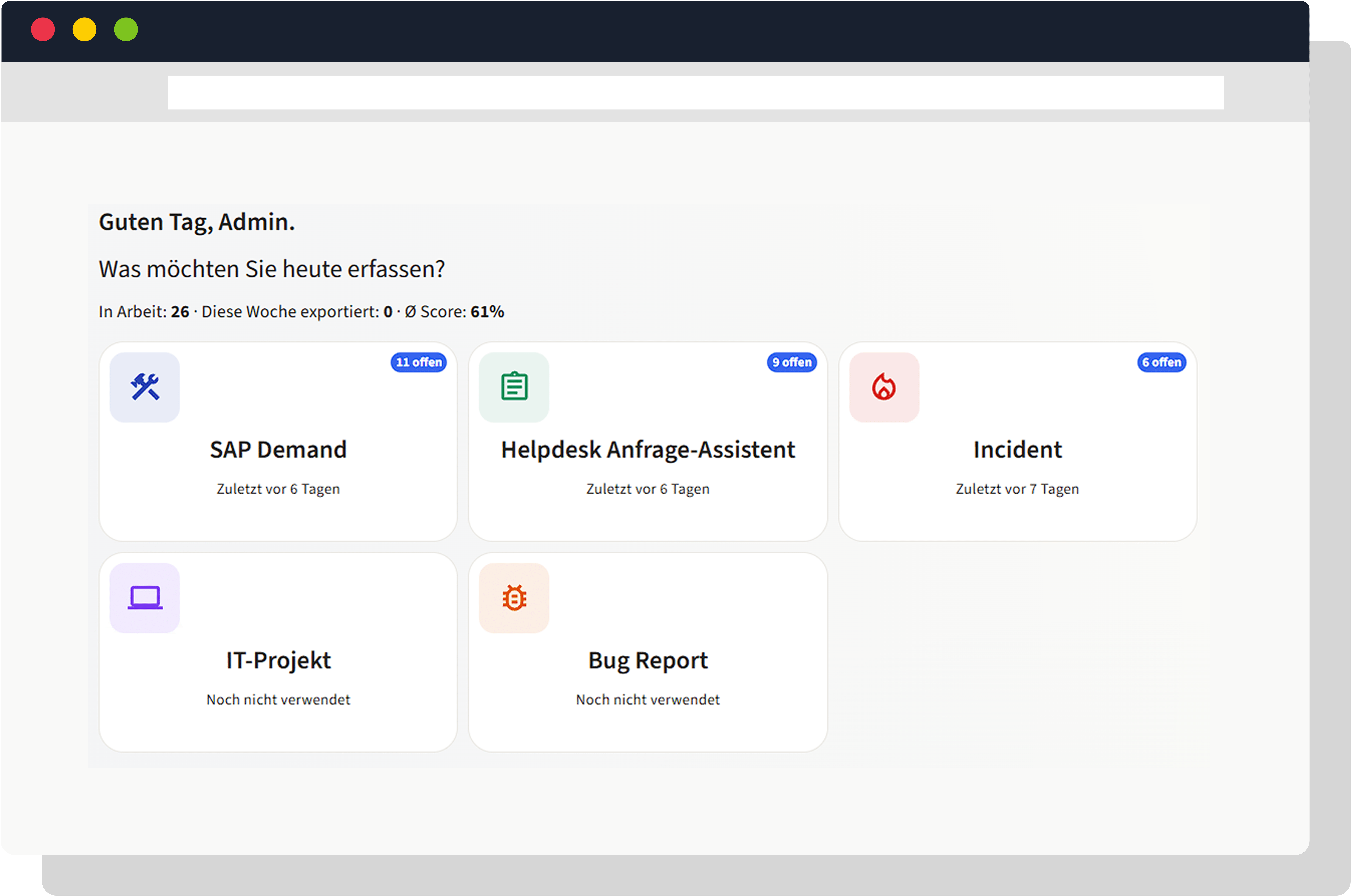
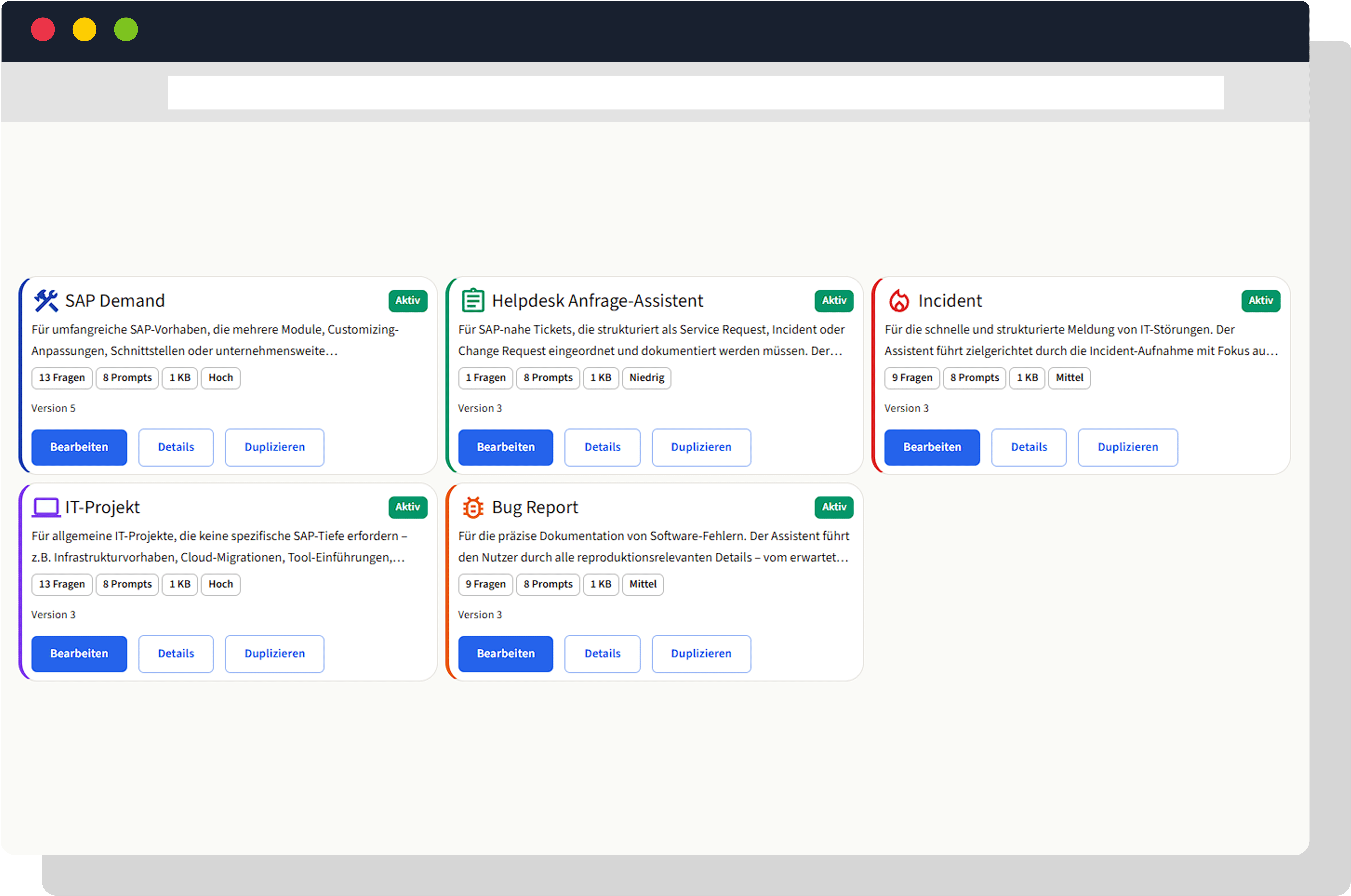
Five domain-specific requirement types
Five templates are available out of the box: SAP Demand, Help Desk Request, Incident, IT Project, and Bug Report. Each type comes with its own set of questions, rules, knowledge sources, and output formats, and can be freely named and configured.
More Highlights
Throughout the survey, users can see at any time how the request is structured—with no surprises at the end. (See the illustration at the top of the page.)
AI suggestions are displayed as “Accept/Reject” cards—the human makes the decision. This prevents uncontrolled content from being created.
The completed requirement can be exported in a structured format—as a PDF and Word document for stakeholders, and directly as a Jira ticket (story including BDD subtasks) for the development team.
Every configuration change creates its own version. Drafts are reviewed and activated in a controlled manner—making the process traceable and auditable.
Scoring can be configured down to the field level—with deterministic/AI weighting, rules per field, quality tiers, and an impact preview that simulates changes without writing data.
Free Demo
Your Fastest Path to Clear Requirements
Experience the entire process live—from the first AI-guided conversation to a complete, verifiable requirement with acceptance criteria and test cases. In just a few minutes, you’ll see how the Assistant identifies gaps, fills in the missing information, and generates a structured ticket—without any preparation or training. Learn how,
- How AI Asks Precise, Domain-Specific Questions
- How Documents Are Automatically Included
- How Quality and Completeness Are Assessed in Real Time
- How a Development-Ready Artifact Is Created
- How the ticket is exported and transferred directly
How Our Requirements Engineering AI Tool Works
Unlike chatbots, templates, or traditional workshops, AI does not simply engage in random conversation; rather, it orchestrates a comprehensive analytical process: asking targeted questions, incorporating internal knowledge, identifying gaps, verifying quality, and producing an artifact ready for development.
The slider arrows will be here
You select the appropriate type (e.g., SAP Demand, IT Project, Incident, Bug, Service Request). Each type comes with domain-specific questions, rules, knowledge sources, and output formats.
The AI guides users through a structured conversation and automatically detects when important details, dependencies, or acceptance criteria are missing—without requiring users to be familiar with requirements methods.
The tool searches relevant documents (specs, guidelines, legacy system tickets, policies) and inserts relevant content with source citations—supplemented by documents you've uploaded yourself.
A live score immediately shows whether the requirement is unambiguous, testable, and complete, and suggests specific improvements.
A technical AI agent translates business requirements into technical requirements. This results in clear requirements, acceptance criteria (Given/When/Then), test cases, and contextual information.
With just a few clicks, the finished artifact can be sent to stakeholders as a PDF or Word document, or submitted to the development team as a structured Jira ticket—without any loss of data.
How the Requirements Engineering AI Tool Works Across Different Industries and Roles
Financial and Insurance Service Providers
The AI takes your stored guidelines into account (e.g., regarding BaFin, DORA, MiCAR), supplements them with relevant passages from internal policies, and generates audit-ready requirements.
Industry & Mechanical Engineering
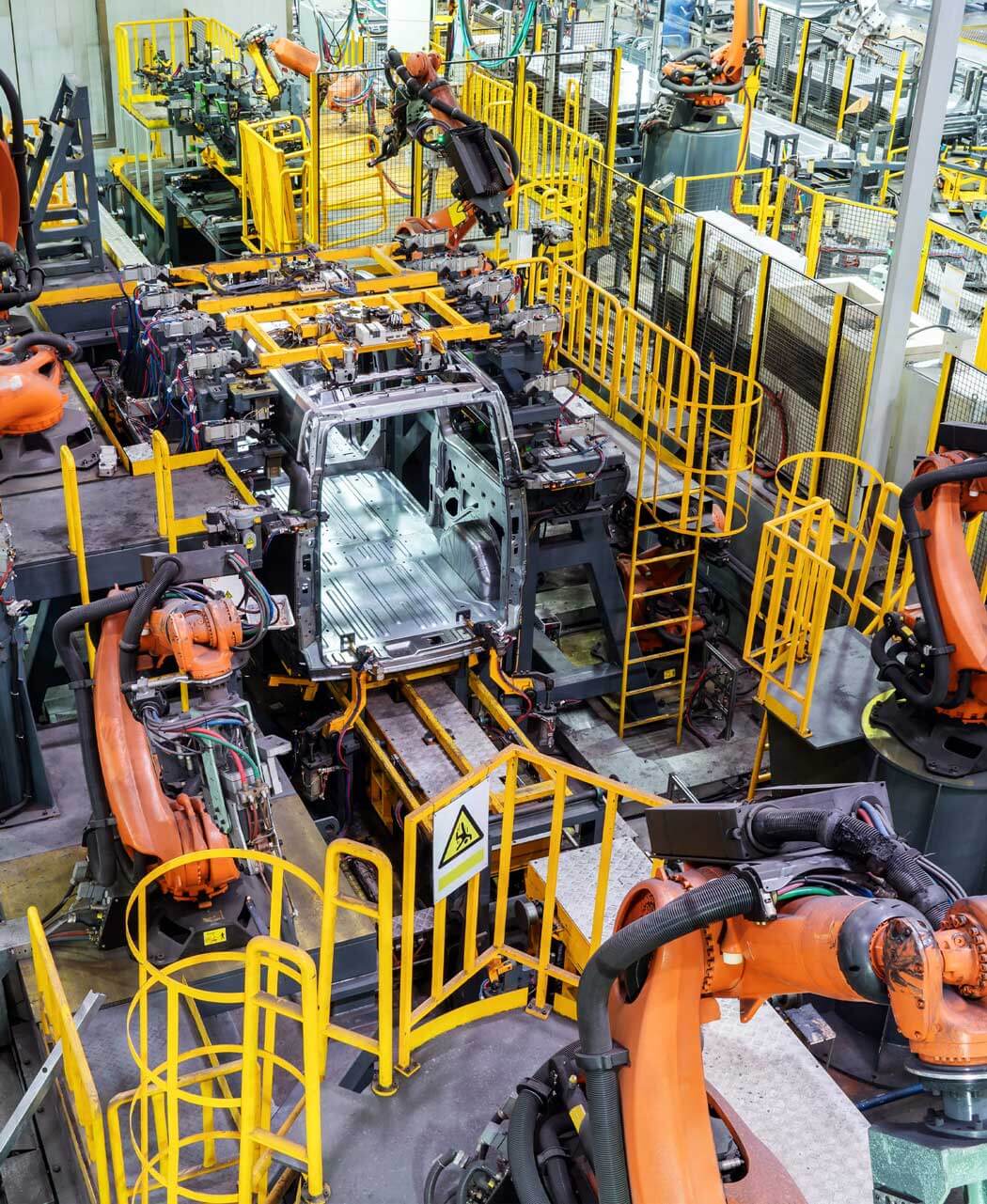
AI guides users through technical, procedural, and safety-related issues—for complete specifications of machinery, manufacturing, or OT systems.
Healthcare & MedTech
The tool incorporates your SOPs and regulatory requirements and generates traceable, well-documented requirements.
E-Commerce & Marketing
Structured requirements for store features, checkout, analytics, CMS integrations, and personalization—fewer misunderstandings between marketing, product, and IT.
Public Sector & Government
The tool takes into account established guidelines and responsibilities—to ensure clear, transparent requirements for administrative software and specialized procedures.
Software & SaaS Companies
AI helps product teams clearly structure feature requests, generate acceptance criteria, and identify dependencies.
Seamlessly integrated
The tool integrates into your digital infrastructure and serves as the connecting layer between business units, IT, and development.
Now available:
- Export & Delivery: PDF, Word, Jira (Story, including BDD subtasks)
- Single Sign-On via Microsoft Entra (Azure AD)
- Knowledge Sources/RAG, including the ability to upload your own documents
In the planning stages:
- Confluence / Internal Document Repositories
- ServiceNow / ITSM
- SIEM & Monitoring
- Additional systems via open APIs
Why Our AI Tool for Requirements Engineering
GDPR-compliant
Operations in EU data centers (Azure), no use of your data for model training, role-based access, and data separation between organizational units.
Audit- and Compliance-Ready
Transparent proposals, versioned configurations, and a traceable change history—so you’re always ready to provide evidence when needed.
Be productive from the very first session
The guided AI chat walks your teams through the process—complete requirements are generated instantly, without the need for methodological knowledge or training.
No-Code Configuration
You can configure templates, questions, knowledge sources, and scoring yourself—no IT ticket, no developers, no waiting.
GDPR-compliant
Audit- and Compliance-Ready
Be productive from the very first session
No-Code Configuration
- Talk directly with subject matter experts—no sales team involved
- Free Assessment of Your Situation and Needs
The Comparison That Provides Clarity: ChatGPT vs. Requirements Engineering AI Tool
General AI Chat (e.g., ChatGPT)
- Free chat, no hassle
- General knowledge, no evidence
- No measurement
- Body text
- No versioning
- Copy and Paste
- No roles
AI Tool for Requirements Engineering
- Guided, domain-specific data collection process
- Your documents via RAG – with source citation
- Live Completeness Score with Threshold Gate
- Acceptance Criteria & Test Cases (Given/When/Then)
- Versioning, Accept/Reject, Activity Log
- Export as PDF, Word, and Jira ticket
- Role/Permission Model, Client Isolation
Your contact for the AI Requirements Engineering Tool


Who Will Find Our Requirements Engineering AI Tool to Be a Game-Changer?
- Product Teams – quickly define clear requirements, ideal for agile delivery.
- IT & Engineering Teams – clear, complete tickets that can be acted upon immediately.
- Departments & Business Owners – Defining Requirements Without Methodology Training.
- Project & Transformation Teams – Audit-Ready Documentation and Faster Cycles.
Schedule a no-obligation demo appointment now
- Smart: AI-powered requirements gathering, clear specifications, standardized processes.
- Secure: Transparent AI processes, role-based access, and traceable documentation.
- Proven in Practice: Experience from IT projects, enterprise teams, and regulated industries.
- Measurable: Less rework, shorter lead times, higher quality of requirements.

TISAX and ISO certification apply only to the Munich location
Your message



FAQ - Frequently Asked Questions About the Requirements Engineering AI Tool
The AI works with domain-specific questions and knowledge bases and provides suggestions that are always approved by humans—a controlled, reliable process.
All AI suggestions are displayed transparently, cited, and must be confirmed. The human-in-the-loop mechanism prevents uncontrolled content.
Access is role-based, data is segregated between regions, and the service can be operated in EU data centers (Azure). With Azure OpenAI, your data is contractually prohibited from being used for model training.
Yes—templates, questions, prompts, knowledge sources, scoring, and formats can be configured and versioned without code.
The AI can process and link unstructured content; you can upload your own documents. We provide support with the initial preparation of knowledge.
The Jira export is available; additional connectors will be rolled out gradually via standardized APIs without disrupting existing processes.
The guided chat interaction makes the tool intuitive to use—no training or technical knowledge required.
The AI translates business needs into clearly structured technical requirements. Both sides see the same, unambiguous wording.
Yes—every template can be customized or created from scratch, from IT projects to process optimization to service requests.
Comprehensive, audit-ready requirements are established as early as the first session; the need for follow-up questions and coordination time decreases noticeably from the outset.