






Agentic AI in the Renewable Energy Industry - Consulting
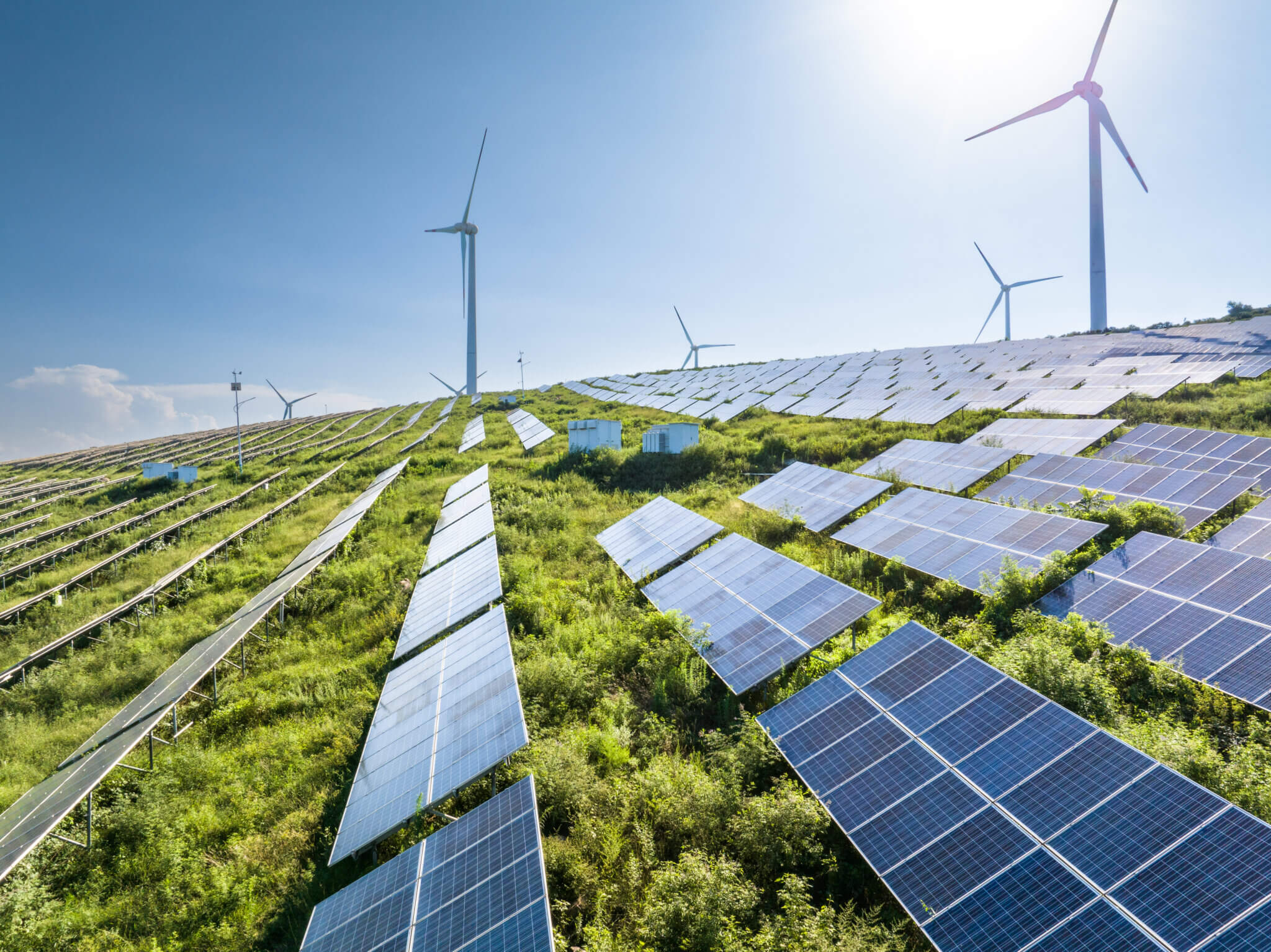
Autonomous AI agents that plan and act are setting a new standard for volatile generation, grid resilience, and sustainable profitability. Renewable energy is now the backbone of the energy transition—but it is also characterized by high volatility, complex regulations, sophisticated technology, and global supply chains. Operators, OEMs, TSOs/DSOs, and traders face enormous challenges: dynamic generation patterns, grid utilization, operating large fleets, OPEX pressure, project risks, decarbonization mandates, and a growing shortage of skilled workers.
Agentic AI is becoming a decisive factor in this landscape: autonomous multi-agents orchestrate asset operations, flexibility, forecasts, supply chains, ESG data, and grid responses—faster, more accurately, and more proactively than traditional systems.
Why Ventum Consulting Chose Agentic AI for the Renewable Energy Industry
Over 1,500 projects completed
Large corporations and small and medium-sized businesses rely on our experience because we deliver what we promise—time and time again.
Over 20 Years of Consulting Expertise at
We know the pitfalls and the shortcuts—so you can get where you’re going faster.
100% Dedicated to Your
Business Success
We aren’t satisfied until you are, because it’s the measurable results that count. That’s how we measure our success.
Strategy through
Implementation
Everything from a single source—so there are no gaps between concept and impact that cost time and money.
+1,500 projects completed
Over 20 years of consulting expertise
100% committed to your company’s success
From Strategy to Implementation
- Response within 24 hours
- Speak directly with subject matter experts—no sales team
- Free assessment of your situation and requirements
Executive Summary – Agentic AI Renewable Energy Industry at a Glance
- Strategic Role: Agents become the central decision-making and orchestration layer for all renewable assets, markets, and grid processes.
- Operational Benefits: Lower OPEX, higher availability, more accurate forecasts, improved grid stability, and automated ESG compliance.
- Growth: virtual power plants, new flexibility markets, digital project development, and optimized energy storage management
- Success Factors: Grid safety, data fabric, edge optimization, compliance by design, and interdisciplinary teams.
The Current State of Agentic AI in the Renewable Energy Industry—An Industry Caught Between Volatility, Regulation, and Pressure to Scale
The renewable energy industry faces technical and operational challenges: output fluctuates significantly, material availability is volatile, grids are operating at full capacity, and project development is complex and difficult to predict from a regulatory standpoint. Fleet management is often handled through heterogeneous SCADA systems; data is fragmented; edge infrastructure is unevenly distributed; and operations teams must simultaneously respond to weather, grid signals, component wear and tear, and market conditions.
In addition, requirements are increasing significantly due to RED III, the EU AI Act, CSRD, and grid codes.
Agentic AI resolves this structural complexity by having autonomous agents aggregate data, simulate scenarios, prepare decisions, and continuously optimize—always transparently, auditable, and under human control.
Agentic AI in the Renewable Energy Industry – Agentic AI Use Cases, Examples, and Practical Applications
Predictive & Prescriptive Asset Maintenance (Wind/Solar/PV)
Real-Time Energy Output Forecasting & Grid Balancing
Autonomous Virtual Power Plant (VPP) & Market Orchestration
Smart Energy Storage & Battery Management
Accelerated Project Development & Site Optimization
Dynamic Supply Chain Resilience for Components
Proactive ESG Reporting & Carbon Footprint Optimization
The Biggest Challenges in Implementing Agentic AI in the Renewable Energy Industry
Renewable energy is considered critical infrastructure, which is why autonomous agents are subject to strict regulations. Grid codes, RED III, the EU AI Act, and national requirements mandate full traceability and human oversight for autonomous dispatch decisions. A lack of regulatory coordination leads to delays, fines, or potential risks to the grid.
Multi-agent systems interact with SCADA, EMS, and OT systems—an attractive target for attackers. Without a zero-trust architecture, segmentation, hardening, and adversarial training, manipulations—even blackouts—can occur. Cyber resilience is therefore a central pillar for secure agent-based systems.
Many wind and solar farms use proprietary control systems and inconsistent interfaces. Agents require uniform, stable data flows and standard protocols. Without this foundation, integration costs rise and rollouts are significantly delayed.
Dispatch, maintenance, and flexibility decisions must be auditable. “Black box reasoning” generates skepticism among TSOs/DSOs and regulators. Without an explainability layer, there is a lack of acceptance for autonomous grid processes.
Asset teams, traders, and engineers need new skills to effectively manage agents. Without this transformation, shadow processes or security risks arise. Agentic literacy and co-creation are crucial.
Weather and load biases can disadvantage specific regions or technologies. Without fairness monitoring, compliance risks arise. Autonomous systems must be continuously monitored and adjusted.
Wind and solar farms operate with limited bandwidth, high latency requirements, and harsh environmental conditions. Non-optimized agents cause OPEX increases or instability in remote environments. Edge optimization and inference management are essential.
Our Consulting Services - Agentic AI in the Renewable Energy Industry with Ventum Consulting
Agentic AI Strategy for Renewables
We develop scalable Agentic AI strategies that take into account volatile generation, grid integration, ESG requirements, and asset performance.
Use Cases, Value Delivery, and Scaling
We identify the most valuable Agentic AI use cases—from asset optimization to VPP—and develop robust ROI models and roadmaps.
Implementation in OT/IT Environments
We securely integrate Agentic systems into EMS, ERP, and edge infrastructures. Every implementation is auditable, compliant with classification requirements, and stable.
Leadership for Transformation
We empower leadership teams to responsibly manage autonomous systems—with clear roles, oversight models, and governance.
Cybersecurity for Critical Energy Grids
We protect agent workflows through zero-trust, hardening, segmentation, and adversarial resilience.
AI Governance & Compliance
We develop governance frameworks that comply with the EU AI Act—including explainability and audit trails.
Agentic Risk Management
We identify agent-specific risks (drift, emergent behavior, OT risks) and establish robust control mechanisms.
Energy Data Strategy
We develop data fabrics and interoperable data spaces that consistently connect assets, SCADA, weather, markets, and ESG data.
Analytics & Performance
We provide insights and dashboards that support agent decisions and make performance transparent.
Data-Driven Energy Organization
We embed data-driven work practices through roles, standards, and responsibilities.
AI Operating Model
We define organizational structures in which people and agents collaborate effectively.
Change Management
We support asset teams, trading, and operations in the implementation and adoption of new agent-based systems.
Enablement & Training
We train engineers, asset managers, and trading teams in agentic AI, oversight, responsible AI, and energy IT.
Workshops
We offer workshops on prioritization, risk analysis, architecture reviews, and roadmaps.
Your Experts in Agentic AI Consulting for the Renewable Energy Industry



The Future of Agentic AI in the Renewable Energy Industry
Agentic AI will completely transform the energy sector by 2030. Renewable energy parks are evolving into self-optimizing, resilient systems that respond autonomously to weather, prices, grid signals, and risks. Dispatch plans, maintenance windows, flexibility, and market transactions orchestrate themselves—with clear oversight mechanisms.
Virtual power plants are becoming intelligent, global multi-agent networks. Project development, simulation, and ESG management will merge into automated pipelines. Companies that implement sovereign data spaces, secure edge architectures, explainability, and human oversight early on will secure efficiency, profitability, compliance, and resilience—and position themselves at the forefront of the energy transition.
Contact
now without obligation
- Strategic: Agentic AI Use Cases for Asset Operations, Grid Integration, Storage, Flexibility, Supply Chain, and Project Development
- Secure: Implementation compliant with theEU AI Act, CSRD, and energy regulations
- Field-Proven: Over 20 Years of Experience in Digital Transformation
- Measurable: Focus on Revenue, OPEX, Availability, CO₂, and Flexibility Margins
- Holistic: People , Technology, Data, Governance, and Processes


TISAX and ISO certification apply only to the Munich location
Your message
Selected Client Testimonials & Examples:
Our Completed Consulting Projects










Frequently Asked Questions About Agentic AI in the Renewable Energy Industry
Rapid efficiency gains result from reduced downtime, lower balancing energy costs, stable grids, and optimized maintenance. As the solution scales across generation, the grid, trading, and flexibility services, the economic benefits grow significantly. ROI is typically achieved within a few months to one year.
No—humans remain the final authority, especially in the Grid and mission contexts. Agents provide support through real-time analysis, recommendations, and automated tasks. This improves the quality of decision-making and speeds up the process.
Through Explainability by Design, documented decision logs, human oversight, and the integration of regulatory rules directly into the agent’s logic. Compliance teams are involved early on. This ensures the system remains auditable and legally compliant.
Through continuous fairness checks, monitoring, and diversified training data. Agents are continuously validated to prevent misallocations. “Equity by Design” is mandatory in large energy systems.
Maintenance, yield forecasting, storage control, VPP orchestration, and the supply chain. These use cases deliver rapid efficiency and profitability gains. Next come project development and ESG management.
Teams are shifting toward supervisory and control roles, while agents autonomously take on repetitive, data-intensive tasks. People make strategic decisions and coordinate complex cases. This makes companies more resilient and better prepared for the future.