






Agentic AI in the Machine Tool Industry - Consulting
Intelligent Automation for Precision, Manufacturing, and Smart Machine Operations
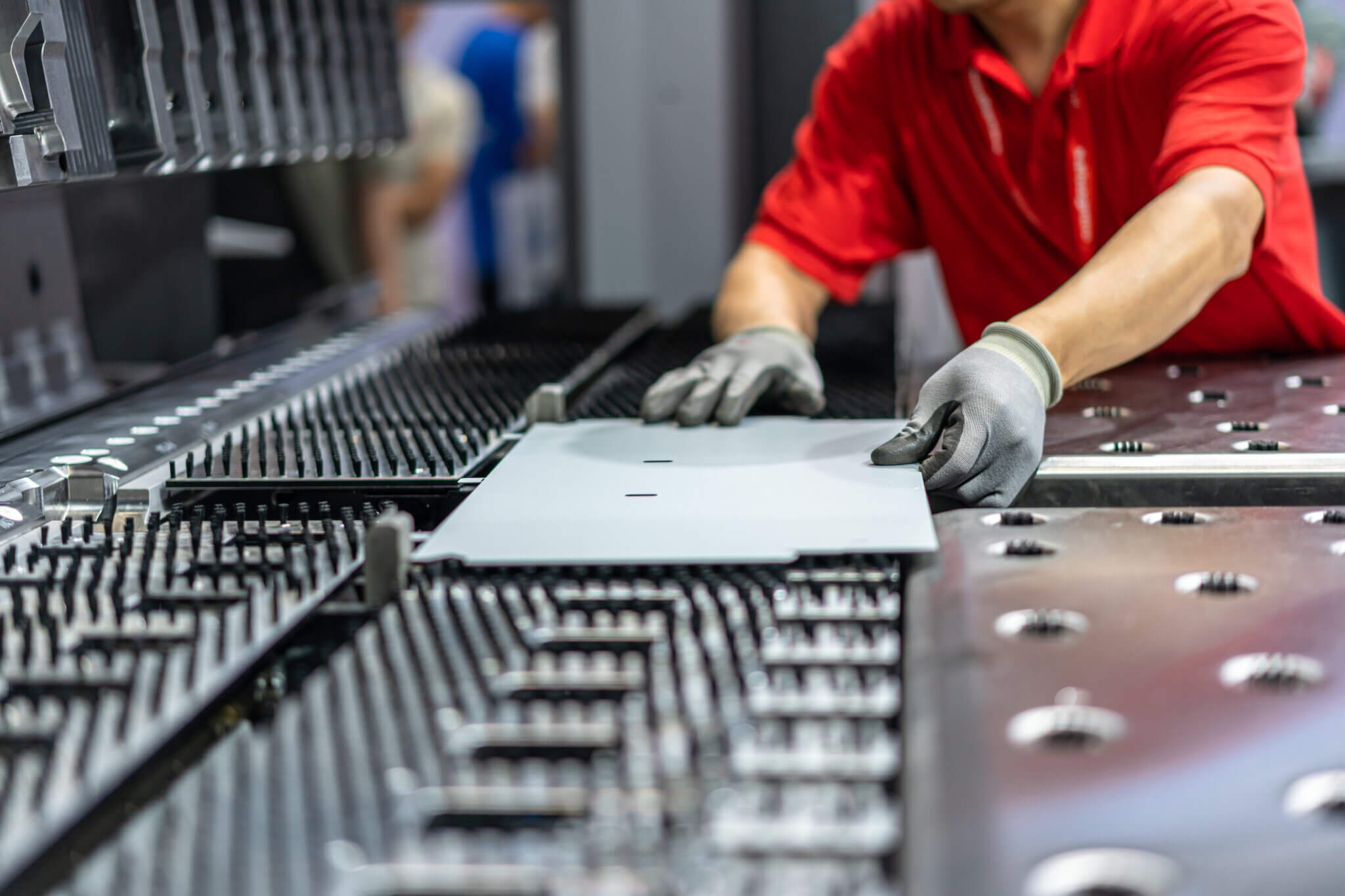
Autonomous AI agents that plan and act are setting a new standard for precision, efficiency, and adaptive manufacturing. The machine tool industry is currently at a turning point: increasing product complexity, a shortage of skilled workers, volatile supply chains, high energy prices, stricter ESG and safety standards, and the need to operate manufacturing processes in a reliable, resilient, and highly automated manner. At the same time, enormous volumes of data are being generated—from CNC controls, sensors, CAM systems, MES/ERP stacks, tool databases, and digital twins—yet the integration of this data often remains fragmented.
Agentic AI closes exactly this gap: autonomous multi-agent systems analyze processes, optimize cutting parameters, orchestrate maintenance, manage quality, simulate programs, and take action in real time—safely, transparently, and under human control.
Why Ventum Consulting for Agentic AI in the Machine Tool Industry
: Over 1,500 Projects Completed
Large corporations and small and medium-sized businesses rely on our experience because we deliver what we promise—time and time again.
Over 20 Years of Consulting Expertise at
We know the pitfalls and the shortcuts—so you can get where you’re going faster.
100% Dedicated to Your
Business Success
We aren’t satisfied until you are, because it’s the measurable results that count. That’s how we measure our success.
Strategy through
Implementation
Everything from a single source—so there are no gaps between concept and impact that cost time and money.
+1,500 projects completed
Over 20 Years of Consulting Expertise
100% Dedicated to Your Company's Success
From Strategy to Implementation
- Response within 24 hours
- Talk directly with subject matter experts—no sales team involved
- Free Assessment of Your Situation and Needs
Executive Summary – Agentic AI Machine Tools at a Glance
- Strategic Role: Agentic AI is becoming a key driver for smarter, more stable, and more efficient manufacturing.
- Operational Benefits: Less downtime, better surface finishes, faster startup times, lower tooling costs, and consistent OEE improvement.
- Growth & Differentiation: OEMs are creating new smart machine capabilities, service models, and premium digital experiences.
- Success Factors: Safety Governance, Edge Architecture, Data Quality, Interface Design, and Human Oversight in Critical Process Paths.
The Current State of Agentic AI in the Machine Tool Industry—An Industry Caught Between Demands for Precision, a Shortage of Skilled Workers, and Legacy Control Systems
Machine tool manufacturers and manufacturing companies operate in complex CNC environments, with heterogeneous control systems, a shortage of skilled workers, and tightly scheduled production windows. Processes are highly sensitive, must be precisely documented, and are vulnerable to material fluctuations, wear and tear, or external disruptions. At the same time, brownfield environments, proprietary control systems, and a lack of standardization make it difficult to scale digital solutions.
Agentic AI addresses these shortcomings through autonomous monitoring, continuous learning, and adaptive process control. The systems analyze conditions, understand manufacturing logic, prepare decisions, and execute actions reliably—resulting in more stable production quality and a measurably higher OEE.
Agentic AI in the Machine Tool Industry – Agentic AI Use Cases, Examples, and Practical Applications
Predictive & Prescriptive Machine Maintenance & Condition Monitoring
Autonomous Process Optimization & Adaptive Machining
Smart Tool Management & Wear Prediction
Dynamic Production Planning & Smart Factory Orchestration
Virtual Commissioning & Digital Twin-Based Validation
Real-Time Quality Control & Inline Inspection
Energy & Resource Management Optimization
The Biggest Challenges in Implementing Agentic AI in the Machine Tool Industry
Agents directly intervene in safety-critical NC processes, which is why the strictest IEC standards apply. The lack of approval pathways for autonomous parameter adjustments leads to liability risks. Without functional safety governance, rollouts are virtually impossible.
Due to their high level of connectivity, CNC and PLC systems are vulnerable to attack vectors such as agent hijacking. Inadequate segmentation, insecure interfaces, or external tool calls significantly increase these risks. Companies must take “security by design” seriously.
Many older-generation Siemens, Heidenhain, or Fanuc controllers have very few standardized API interfaces. This makes data extraction and real-time interaction difficult. Without a clean OT/IT architecture, the result is high complexity and limited scalability.
Adaptive cutting parameters and autonomous tool paths result in complex decision-making processes. A lack of explainability undermines trust among operators and auditors. XAI layers and complete decision paths are therefore indispensable.
Machine operators and programmers are skeptical of autonomous systems, especially when they fear a loss of control. A lack of training leads to resistance. Change programs and co-design are crucial.
Learning systems are often based on historical data that does not cover all materials or scenarios. This can lead to unstable processes or quality issues in edge cases. Drift monitoring is mandatory.
Brownfield environments have limited computing capacity. Agent systems must operate under stringent real-time conditions. Without efficient edge optimization, costs rise and instability increases.
Our Consulting Services - Agentic AI in the Machine Tool Industry with Ventum Consulting
Agentic AI Strategy for Machine Tools & Manufacturing
We develop industry-specific strategies that focus on precision, safety, efficiency, and increasing OEE—tailored to the realities of CNC, PLC, and MES systems.
Use Case, Value Delivery & Scaling
We identify the most valuable Agentic AI use cases across the entire manufacturing chain—from maintenance to digital twins. To this end, we develop robust ROI models and scalable roadmaps.
Implementation
We seamlessly integrate agent systems into CNC controls, MES, ERP, tool management systems, and digital twin environments. Every implementation is auditable, robust, and production-ready.
Leadership
We empower CTOs, production managers, process engineers, and OT teams to safely manage Agentic AI systems—using governance models, autonomy levels, and oversight processes.
Cybersecurity
We protect OT and agent workflows from attacks, data leaks, and tampering—using zero-trust, network segmentation, edge hardening, and monitoring.
AI Governance & Compliance
We develop AI governance for high-risk processes in accordance with the EU AI Act—including explainability, audit trails, and documented decision logging.
Risk Management
We identify agent-specific risks (drift, emergent behavior, misdirection) and implement robust validation and oversight mechanisms.
Data Strategy
We develop data strategies based on OPC UA/TSN, digital twin standards, and edge optimization—for high-quality, agent-enabled manufacturing data.
Analytics & Performance
We provide KPI models, OEE insights, quality heat maps, and predictive analytics that empower decision-makers and guide agents.
Data-Driven Organization
We establish data-driven decision-making processes—with roles, standards, and governance for sustainable, AI-native production operations.
AI Organization & Operating Model
We define modern role models such as Agent Supervisor, OT-AI Controller, and Digital Twin Owner to ensure safe and productive agent operations.
Change Management
We guide production teams, operators, and developers through transformation, address concerns, and foster co-creation.
Enablement & Training
We train OT, CNC, and engineering teams in the fundamentals of Agentic AI, Responsible AI, oversight, and process integration.
Workshops
Our workshops provide a quick start: use case prioritization, risk analysis, architecture design, and roadmap development.
Your Experts in Agentic AI Consulting for the Machine Tool Industry



The Future of Agentic AI in the Machine Tool Industry
In the coming years, autonomous agents will fully orchestrate process chains—from the initial idea through programming and simulation to adaptive manufacturing. Machines will become “AI-defined tools” that optimize themselves, identify risks, and proactively prepare decisions. Digital twins, robotics, and agents will converge into hyper-adaptive production systems that simultaneously improve quality, efficiency, and sustainability.
Production networks are becoming more resilient, flexible, and automated. Companies that establish governance, data rooms, human oversight, and edge optimization early on secure a sustainable competitive advantage—in an industry that continues to thrive on precision, security, and efficiency.
Contact
now without obligation
- Strategic: Agentic AI Use Cases for Maintenance, Machining, Planning, Digital Twins, and Quality
- Secure: Implementation Compliant with the EU AI Act and the GDPR
- Proven in practice: Over 20 years of experience in digital transformation
- Measurable: Focus on OEE, cycle time, scrap, energy, and process reliability
- Holistic: People , Technology, Data, Governance, and Processes




TISAX and ISO certification apply only to the Munich location
Your message
Selected customer references & examples:
Our realized consulting & advisory projects










Frequently Asked Questions About Agentic AI in the Machine Tool Industry
Agents are deployed only under IEC-compliant security and governance mechanisms. Explainability, audit trails, and human oversight ensure that every autonomous adjustment remains traceable. When implemented correctly, agents enhance process reliability.
No — Agents handle repetitive, data-intensive, and time-sensitive tasks. People remain responsible for quality control, process validation, and creative optimization. The collaboration between people and agents results in greater precision and efficiency.
Through Zero Trust, segmentation, secure edge infrastructure, and hardening of all API and NC interfaces. Every agent action is logged and validated. This makes the OT environment more stable and resilient.
Drift detection, fairness analyses, and continuous validation are mandatory. Agents must be trained using a diverse set of data and realistic edge cases. A monitoring loop corrects systematic errors early on.
Condition monitoring, process optimization, tool management, and quality control are mature and deliver immediate value. They require minimal disruption to existing processes. Next come deployments in production planning, energy optimization, and virtual commissioning.
Teams become units that monitor and coordinate, while agents handle routine and real-time tasks. Programmers, operators, and engineering teams gain the freedom to focus on process improvement, innovation, and quality. Manufacturing operations become more efficient, modern, and stable.