






Agentic AI in the Food Industry - Consulting
Smart Transformation for Food Safety, Supply Chain, and Sustainable Production
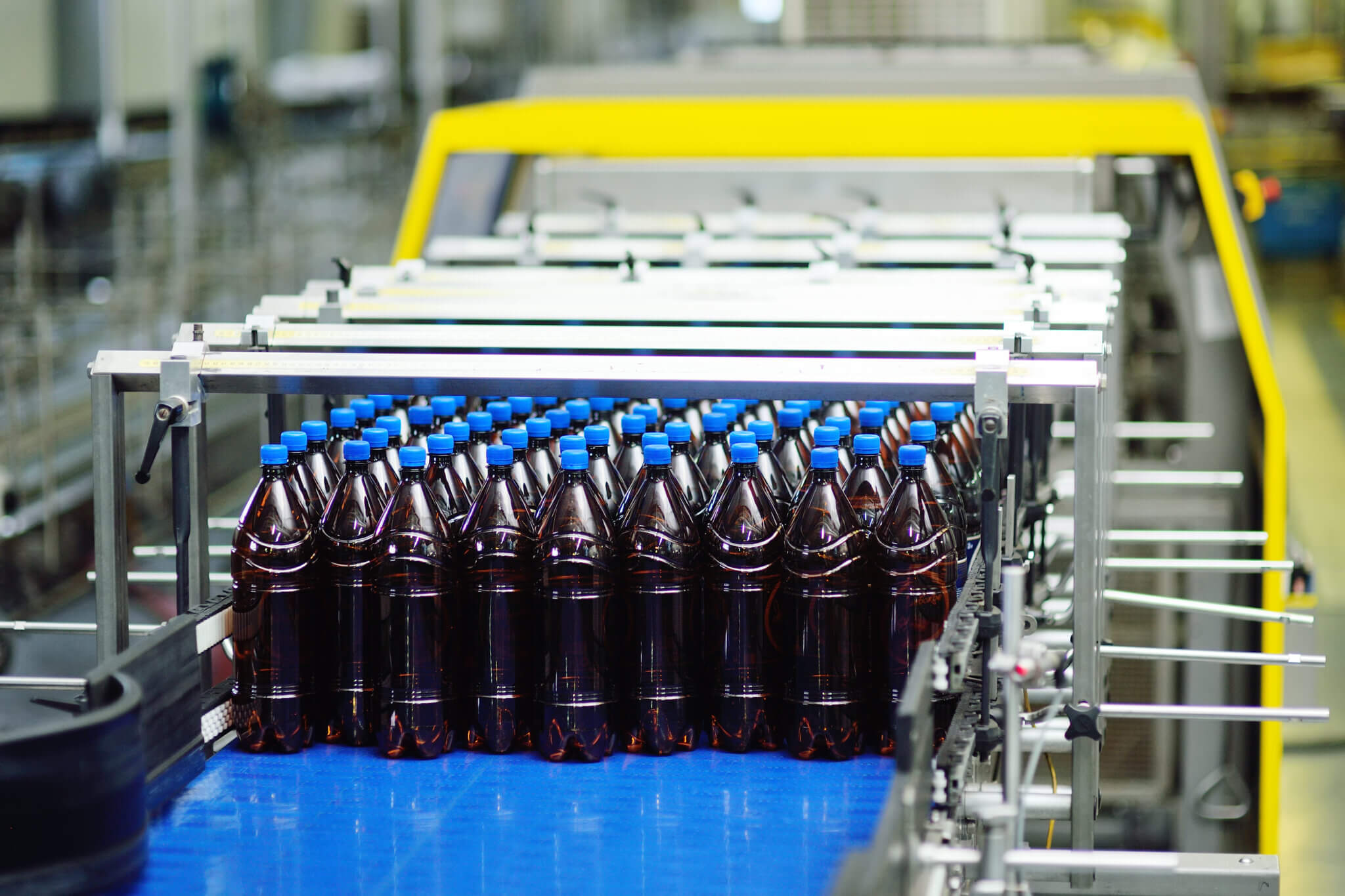
Autonomous AI agents that plan and act as the new standard for food safety, efficiency, and sustainable value creation.
The food industry is caught between the conflicting demands of the highest safety standards, global raw material volatility, complex supply chains, cost pressures, ESG requirements, and rising customer expectations. At the same time, production facilities, supply networks, and quality controls are extremely data-intensive—yet information is often isolated, scattered, and difficult to utilize.
Agentic AI is changing the fundamental principle: autonomous multi-agents connect data, monitor food safety signals, orchestrate processes, and make operational decisions in real time—from farm to fork.

Why Ventum Consulting for Agentic AI in the Food Industry
: Over 1,500 Projects Completed
Large corporations and small and medium-sized businesses rely on our experience because we deliver what we promise—time and time again.
Over 20 Years of Consulting Expertise at
We know the pitfalls and the shortcuts—so you can get where you’re going faster.
100% Dedicated to Your
Business Success
We aren’t satisfied until you are, because it’s the measurable results that count. That’s how we measure our success.
Strategy through
Implementation
Everything from a single source—so there are no gaps between concept and impact that cost time and money.
+1,500 projects completed
Over 20 Years of Consulting Expertise
100% Dedicated to Your Business Success
From Strategy to Implementation
- Response within 24 hours
- Talk directly with subject matter experts—no sales team involved
- Free Assessment of Your Situation and Needs
Executive Summary – Agentic AI Food Industry at a Glance
- Strategic Role: Coordinates food safety, production, raw materials, sourcing, and logistics.
- Operational benefits: less scrap, fewer recalls, higher yield rates, faster decision-making.
- Growth & Differentiation: new sustainable products, greater CO₂ transparency, and more resilient supply chains.
- Success Factors: Data Fabric, HACCP Compliance, Edge Integration, Governance & Human Oversight.
The Current State of Agentic AI in the Food Industry—A Complex Ecosystem Balancing Safety, Volatility, and Pressure to Improve Efficiency
The food industry typically deals with highly sensitive processes, strict regulations, and fragmented data structures: quality assurance is often done manually, production lines have evolved over time, supplier networks are spread across the globe, and compliance requirements are becoming increasingly demanding. At the same time, consumers are driving the demand for sustainability, transparency, and personalized dietary trends.
Food safety risks, product recalls, volatile raw material prices, shelf life challenges, and ESG obligations are putting pressure on margins and operational stability. Agentic AI bridges this gap—agents integrate data, identify risks early, orchestrate supply chains, optimize recipes, and make safety-critical decisions in a transparent and auditable manner.
Agentic AI in the Food Industry – Agentic AI Use Cases, Examples, and Practical Applications
Real-Time Quality Control & Food Safety Monitoring
Autonomous Supply Chain Traceability & Farm-to-Fork Orchestration
Dynamic Production Planning & Yield Optimization
Predictive Maintenance & Equipment Orchestration
Optimization of Sustainability and Waste Reduction
Custom Product Development & Formulation
Demand Forecasting & Inventory Orchestration
The Biggest Challenges in Implementing Agentic AI in the Food Industry
Food safety regulations such as HACCP, LFGB, FSMA, and the EU AI Act are considered the strictest in the industrial sector. Decisions made by regulatory agencies regarding safety or quality processes require clear audits, certification pathways, and transparent decision-making logic. Without early coordination with regulatory authorities, delays or operational risks may arise.
Agents access data from IoT sensors, supplier portals, and logistics systems—an attractive target for manipulation. The absence of zero-trust architectures and inadequate blockchain safeguards jeopardize traceability and product safety. Any vulnerability can lead to significant risks.
Many production facilities rely on legacy PLC, ERP, or MES systems that lack standardized APIs. Agents require reliable data and real-time connectivity; without these, latency issues or poor decision-making can occur. Integration is often the limiting factor, not the AI model itself.
Decisions regarding recalls, production parameters, or formula adjustments must be supported by transparent reasoning. “Black box reasoning” is particularly risky in the food industry. Companies must integrate explainability layers and documented decision logs.
Production and QA teams rarely have expertise in agentic AI. A lack of acceptance arises when the benefits or control mechanisms are unclear. Co-creation, training, and clear role models are crucial.
Imbalances in historical data can lead to incorrect recommendations regarding formulations or allergen checks. This poses a risk to health, the brand, and regulatory compliance. Fairness monitoring and Ethical by Design must be carried out continuously.
Food processing requires millisecond response times and robust edge infrastructure. A lack of optimization leads to latency, peak instability, and high OPEX. Companies need efficient inference pipelines and scalable architectures.
Our Consulting Services - Agentic AI in the Food Industry with Ventum Consulting
Agentic AI Strategy
We develop scalable strategies for deploying autonomous AI agents in companies—tailored to governance, objectives, value creation, and risk.
Use Cases, Value Delivery, and Scaling
We prioritize use cases based on business value, create ROI models, and design roadmaps with clear value drivers.
Implementation
We integrate agents into existing processes, architectures, and tools in a stable, auditable, and secure manner.
Leadership
We empower organizations to manage Agentic AI systems responsibly—through roles, oversight, and governance.
Cybersecurity
We secure agency systems, data rooms, and pipelines through zero-trust, hardening, and monitoring.
AI Governance & Compliance
We develop governance frameworksthat comply with the AI Act, the GDPR, and industry standards.
Risk Management
We establish mechanisms for drift detection, fairness monitoring, bias control, and secure escalation paths.
Data Strategy
We build data spaces and data fabrics for high-quality, interoperable Agentic AI workflows.
Analytics & Performance
We develop insights, dashboards, and KPIs to optimize the management of agents and processes.
Data-Driven Organization
We embed data-driven work practices into our organizational structure—in a sustainable, scalable, and transparent way.
AI Organization & Operating Model
We design modern organizational models for human-agent collaboration.
Change Management
We guide teams through AI transformation and foster acceptance through co-creation and communication.
Enablement & Training
We train teams in Agentic AI, oversight processes, prompt engineering, and responsible AI.
Workshops
We provide support for use case prioritization, risk assessment, architecture reviews, and roadmap design.
Your Experts in Agentic AI Consulting for the Food Industry



The Future of Agentic AI in the Food Industry
In the coming years, autonomous agents will orchestrate the entire food value chain—from raw materials through production to consumers. Food factories will become AI-native production systems in which yield rates, energy consumption, safety parameters, and logistics are optimized 24/7. Supply chains will become more resilient and transparent, and backtracking processes will be nearly fully automated.
Product development is becoming more digital, faster, and more consumer-focused: Formulations are created using data-driven approaches, risks are simulated, and sustainability is becoming a measurable metric. Companies that invest early in governance, data quality, and robust AI infrastructures secure significant advantages in safety, quality, efficiency, and ESG performance.
Contact
now without obligation
- Strategic: Agentic AI Use Cases for Food Safety, Production, Supply Chain, Product Development, and ESG
- Guaranteed: Implementation in Compliance with the AI Act, HACCP, LFGB, FSMA, and GDPR
- Proven in Practice: Experience with Manufacturers, Processors, FMCG Companies, and Retailers
- Measurable: Focus on Yield, Food Safety, OEE, Waste Reduction, and ESG Performance
- Holistic: people, technology, data, governance & processes



TISAX and ISO certification apply only to the Munich location
Your message
Selected customer references & examples:
Our realized consulting & advisory projects










Frequently Asked Questions About Agentic AI in the Food Industry
Agents operate in accordance with clear HACCP, EU AI Act, and FSMA guidelines and document every decision in an auditable manner. With explainability layers and human oversight, safety-critical steps remain under control. When implemented correctly, Agentic AI significantly enhances product safety.
Through zero-trust design, secure edge pipelines, privacy by design, and controlled data flows. Every use of personal data is logged and auditable. Compliance teams maintain full transparency.
Agents require various data sets, fairness checks, and regular monitoring. Bias correction occurs continuously during operation. This ensures security and fairness.
Quality control, supply chain, yield optimization, and demand planning show the earliest results. These areas have clear, data-driven processes. Next come product development, sustainability, and consumer interaction.
Teams are taking on more coordinating and quality-assurance roles, while repetitive tasks run autonomously. Employees gain more time for strategic and creative work. Companies become more agile, efficient, and secure.
Agents require high-quality, interoperable data, edge-capable infrastructure, and scalable pipelines. Companies must lay the architectural foundations early on. Once that is done, Agentic AI can be effectively industrialized.