






AI in the waste management industry: use cases, examples & applications for efficiency, sustainability & circular value creation
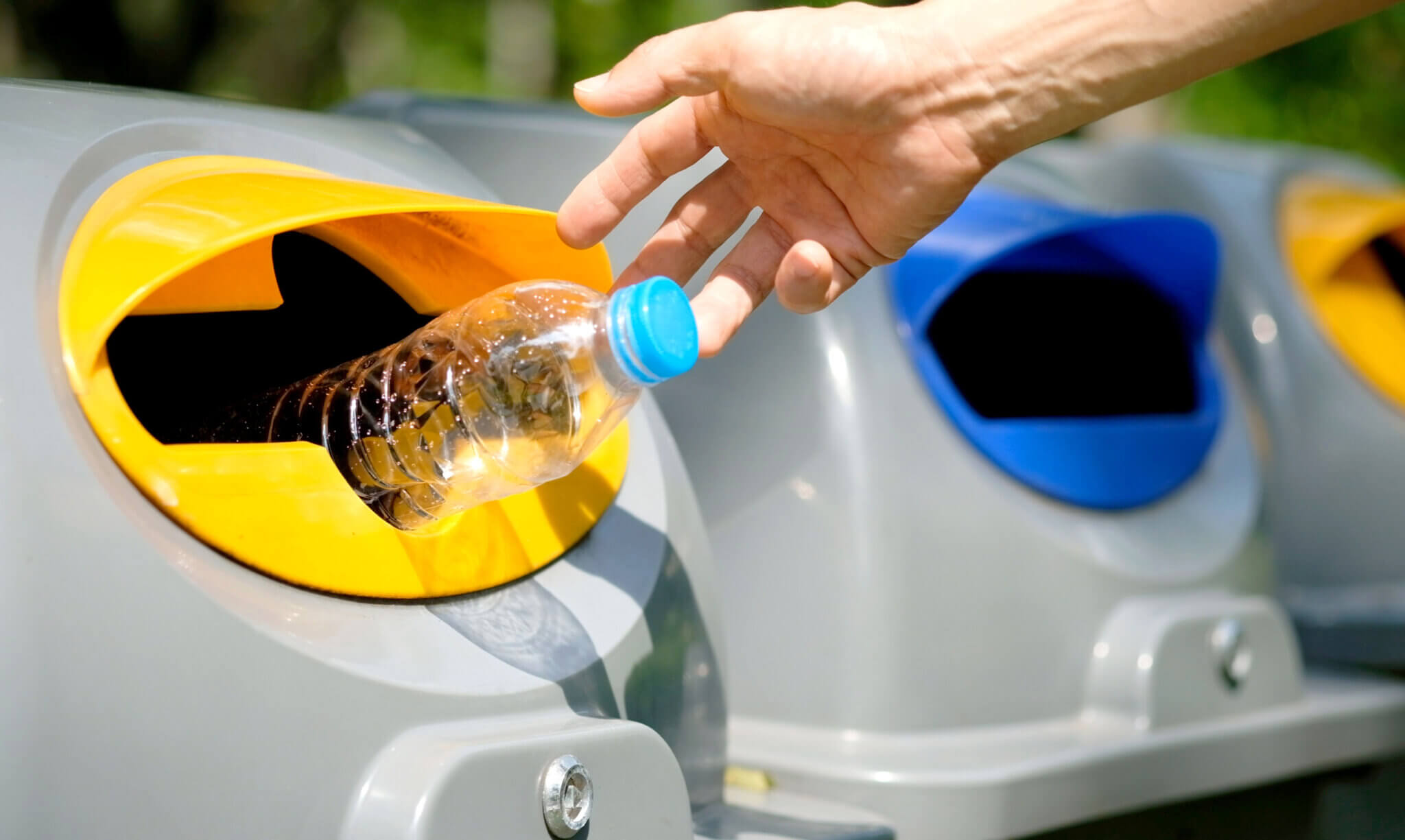
Artificial intelligence (AI) as a lever for sustainable resource management, operational excellence and economic stability. The waste management industry is facing structural change: CO₂ regulation, the Circular Economy Act, ESG pressure, increasing recycling quota requirements, volatile raw material prices, a shortage of skilled workers, increasing urbanization and the need to reduce costs and increase efficiency. At the same time, enormous amounts of data are being generated from sorting plants, sensor technology, IoT containers, telemetry, vehicles, supply chains, quality measurements and municipal waste systems – but much of it remains unused. For companies in the waste management industry, AI is becoming the key to ensuring sorting quality, economic stability, sustainability and regulatory compliance at the same time.

Executive Summary -
AI use cases in waste management at a glance
- Strategic role: AI is the central enabler to increase sorting quality, recycling rates, efficiency and ESG performance in a scalable manner.
- Operational benefits: AI optimizes sorting lines, logistics, plant operation, forecasts, quality assurance and reporting - measurable and industry-proven.
- Growth & differentiation: AI enables circular business models, upcycling processes, data-based citizen interaction and new material revenue streams.
- Success factors: AI Act compliance, sensor-based data quality, edge AI infrastructure, safety gates, change management and phase-based industrialization.
Status quo of AI applications in waste management - fragmented data, volatile volume flows & growing regulatory requirements
Waste management is characterized by high variability: material flows fluctuate seasonally, municipal & commercial data varies greatly, plants operate in energy-intensive conditions, sorting quality is difficult to control and sustainability & traceability requirements are constantly increasing. AI complements this environment with automated sorting, real-time control, predictive maintenance, risk analysis, digital twins and sustainable material cycles – creating true circular economy intelligence.
AI use cases in waste management -
AI use cases and examples of applications in practice
AI-supported waste sorting & classification
Predictive maintenance of systems & vehicles
Optimized logistics & route planning
Waste forecast & demand planning
Quality & contamination control
Generative AI for circular economy & material simulation
Personalized citizen advice & waste management
Advantages of AI use cases in waste management
- Significantly higher purity levels with lower sorting costs
- More system availability through predictive maintenance
- Lower emissions & costs through optimized routes & energy use
- More stable recycling chains through material & quantity forecasts
- Higher compliance through automated documentation
- Citizen-centered processes through intelligent consulting & feedback loops

Your experts for AI applications & use cases in waste management


Risks and regulatory challenges when using AI in waste management
for sorting & profiling systems
due to municipal differences
for similar fractions
For large models & edge systems
through IoT networking
in Technology, AI & Plant operation
across distributed systems
The future of AI in waste management
In the coming years, waste management will develop into an AI-native, highly networked and fully circular ecosystem.
Agentic sorting systems will autonomously coordinate material flows, react to contamination in real time and independently optimize line parameters. Digital twins will map complete recycling, sorting and waste-to-value processes – from collection to sorting and reuse. Multimodal AI models combine image, sensor, chemical and behavioral data and enable precise cycle analyses, material forecasts and flexible upcycling options. At the same time, a new level of predictive prevention is emerging: AI recognizes incorrect separation, waste volumes and trends before they arise – and supports municipalities and companies with proactive recommendations for action. Sustainability is becoming a second, equally important management objective: AI helps to transparently manage CO₂ profiles, material cycles and energy flows. Adaptive, resilient AI infrastructures make plants more robust, safer and significantly more efficient – and enable new business models such as data-driven recycling services, material-as-a-service or municipal participation platforms. Companies that focus on governance, data quality, edge infrastructure and circular ecosystems early on will be the pioneers of this transformation – towards an AI-native circular economy.
Contact now without obligation
- Strategic: AI use cases for sorting, logistics, quality, recycling & ESG
- Secure: EU AI Act, GDPR & circular economy-compliant implementation
- Proven in practice: Over 20 years of experience in digital transformation
- Measurable: focus on people, recycling rate, CO₂ reduction, OPEX & efficiency
- Holistic: technology, data, governance, sustainability & organization from a single source




TISAX and ISO certification for the Munich office only
Your message
Selected customer references & examples:
Our realized AI projects










Also discover our AI workshops to identify, prioritize and implement your use cases & applications
Design Sprint Workshop for AI – from business case to product in 5 days
Find out how your AI idea can be turned into a testable prototype in just five days – user-centered, technically sophisticated and usable as a sound basis for decision-making on strategy, product development and investment.
AI workshop: Develop your own AI use cases – identify and implement use cases
Develop the most relevant AI use cases for your company step by step – from structured identification and prioritization to initial prototypes that clearly demonstrate the benefits, feasibility and next steps.
AI workshop for companies: Understanding and successfully implementing innovations
In this AI workshop, you will learn how to use sound know-how, practical use cases and modern AI methods to anchor artificial intelligence strategically, efficiently and sustainably in your company – for more clarity, innovative strength and measurable added value.
Frequently asked questions about AI use cases in waste management
Because efficiency, recycling quality, climate targets and economic pressure are all increasing at the same time. AI enables more precise sorting, better logistics, less downtime and more sustainability – while reducing costs.
AI-powered sorting, predictive maintenance and waste volume forecasting offer the fastest, low-risk value levers. They reduce costs, increase quality and create confidence for more complex projects.
For example, via KPIs such as sorting purity, CO₂ reduction, recycling rate, OPEX, route efficiency, downtime reduction or material yield.
Value gates and MLOps monitoring ensure scalable value creation.
Through precise material analyses, CO₂ tracking, simulation of circular processes and optimization of upcycling paths. AI is thus becoming the heart of modern circular economy models.