









AI in the machine tool industry: use cases, examples & applications of precision, productivity & production
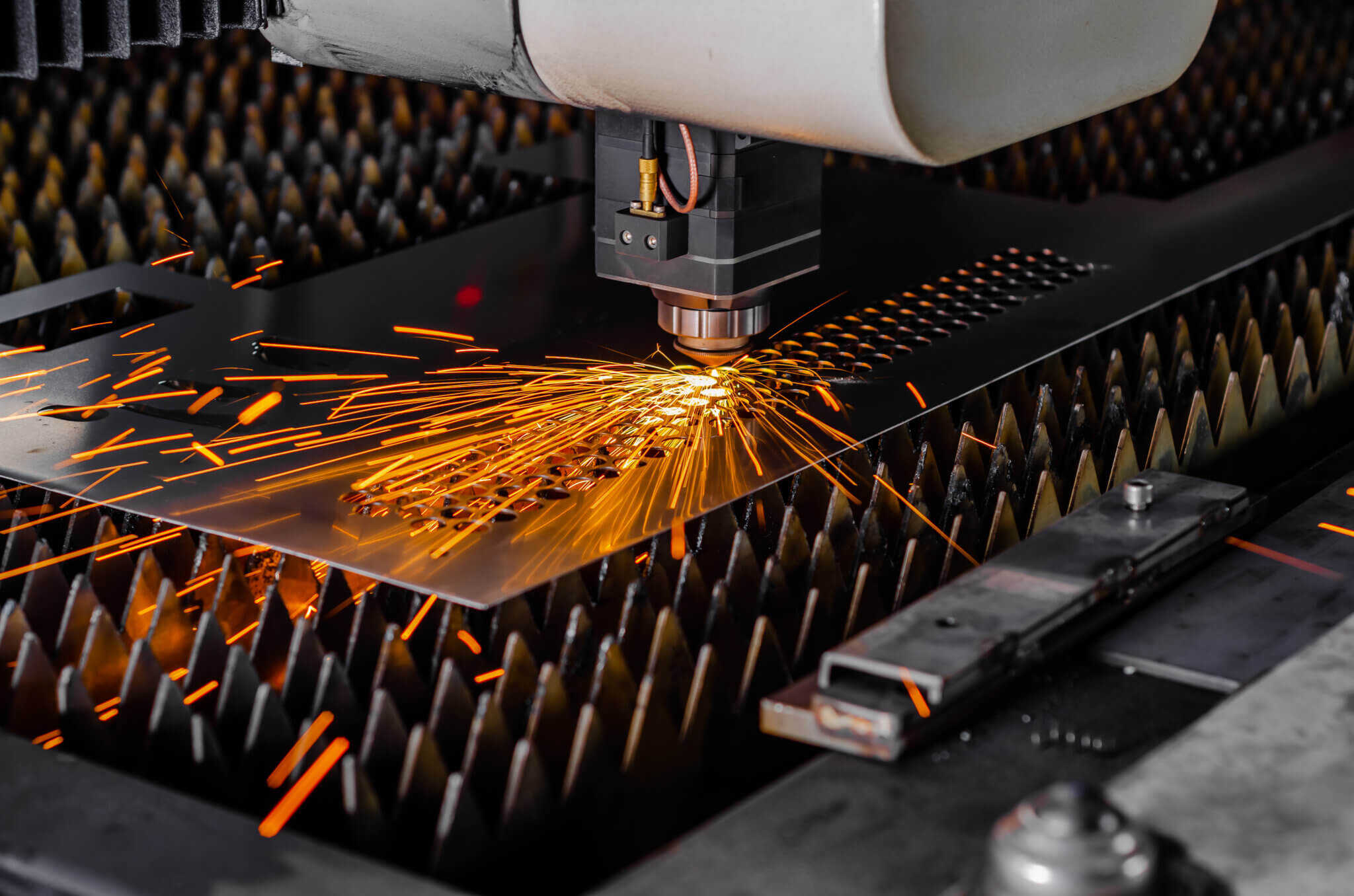
Artificial intelligence as a key technology for precision, efficiency and sustainable manufacturing. Machine tools are the backbone of industrial value creation – but they are under massive pressure: rising energy costs, a shortage of skilled workers, more complex components, higher quality requirements, volatile supply chains, regulatory ESG targets and increasing cyber risks in the OT environment. At the same time, data volumes from sensors, vibration sensors, axis movements, CNC logs, vision systems, tool life cycles and work processes are growing exponentially. For companies in tool manufacturing, AI is not an experiment for the future, but a strategic lever for increasing OEE, quality, sustainability and global competitiveness.

Executive Summary -
AI use cases in the machine tool industryat a glance
- Strategic role: AI is becoming the most important factor in increasing precision, productivity and efficiency at the same time - crucial in an industry characterized by high global competitive pressure.
- Operational benefits: AI optimizes maintenance, process control, tool paths, material usage, quality, supply chain and energy consumption - with clear effects on OEE, margins and machine availability.
- Growth & differentiation: AI-native machines, autonomous manufacturing systems and generative tool development enable new services, new business models and a technological edge.
- Success factors: Safety governance, edge AI, high data quality (OPC UA), change management and phase-based implementation determine scalability.
Status quo of AI applications in the machine tool industry - high technical complexity, outdated OT landscapes & strict quality requirements
The machine tool industry is also struggling:
- heterogeneous machinery, some of which is decades old
- lack of sensor technology or non-standardized data formats
- highly complex CNC programs & process variability
- Strict safety requirements (ISO 13849/IEC 61508)
- Massive shortage of skilled workers
AI supplements this reality with predictive, adaptive and generative capabilities that traditional control systems cannot provide.
AI use cases in the machine tool industry - AI use cases and examples of applications in practice
Predictive maintenance & condition monitoring
Adaptive production optimization
Generative design & tool development
AI-based quality control
Supply Chain Resilience & Material Forecasting
Autonomous machine control & human machine interface
Sustainability & energy optimization
Advantages of AI use cases in the machine tool industry
- Increased precision: adaptive process parameters & real-time optimization
- Higher productivity: less downtime, fewer rejects, more efficient processes
- Cost efficiency: less energy consumption, lower service & material costs
- Innovation: faster tool development, mass customization
- Resilience: robust, data-driven supply chains
- Competitive advantage: differentiable AI-native machines & service offerings

Your experts for AI applications & use cases in the machine tool industry


Risks and regulatory challenges when using AI in the machine tool industry
Safety-critical AI must be validated deterministically.
Machine heterogeneity & lack of standards complicate model design.
OT attacks jeopardize security, production & delivery capability.
Without traceability, there is a risk of rejection by customers & authorities.
Custom machines often make models non-transferable.
The future of AI in the machine tool industry
In the coming years, machine tools will evolve from assisted systems to autonomous, self-optimizing production units. Agentic AI models orchestrate processes, identify bottlenecks and optimize tools, parameters and material flows in real time. Multimodal models link process data, material properties, CAD/CAM models, sensor technology and environmental conditions to create fully integrated systems. Generative engineering accelerates innovation and enables new tool concepts that were previously unthinkable. Sustainability is achieved through intelligent energy and material optimization along the entire machine life cycle. Companies that invest today in data quality, safety governance, edge infrastructure and human co-creation will shape the next generation of autonomous, AI native manufacturing systems.
Contact
now without obligation
- Strategic: AI use cases for operations, manufacturing, design, supply chain & energy
- Safe: EU AI Act compliant governance & safety frameworks
- Proven in practice: Over 20 years of transformation experience
- Measurable: focus on people, OEE, waste, energy efficiency & margin improvement
- Holistic: technology, data, safety, ESG and organization from a single source




TISAX and ISO certification for the Munich office only
Your message
Selected customer references & examples:
Our realized AI projects










Also discover our AI workshops to identify, prioritize and implement your use cases & applications
Design Sprint Workshop for AI – from business case to product in 5 days
Find out how your AI idea can be turned into a testable prototype in just five days – user-centered, technically sophisticated and usable as a sound basis for decision-making on strategy, product development and investment.
AI workshop: Develop your own AI use cases – identify and implement use cases
Develop the most relevant AI use cases for your company step by step – from structured identification and prioritization to initial prototypes that clearly demonstrate the benefits, feasibility and next steps.
AI workshop for companies: Understanding and successfully implementing innovations
In this AI workshop, you will learn how to use sound know-how, practical use cases and modern AI methods to anchor artificial intelligence strategically, efficiently and sustainably in your company – for more clarity, innovative strength and measurable added value.
Frequently asked questions about AI use cases in the machine tool industry
Because machine tools generate enormous amounts of real-time and sensor data that are ideally suited for predictive and adaptive AI systems.
AI increases precision, productivity and energy efficiency at the same time.
Predictive maintenance, quality AI and adaptive process optimization deliver quick results. They are technically manageable and create a strong basis for autonomous production.
E.g. via key figures such as OEE increase, downtime reduction, reject rate, energy consumption, tool life and margin contribution.
Transparent value gates and continuous MLOps monitoring prevent bad investments and ensure predictable scaling.
AI takes over repetitive tasks, provides support in programming, offers intelligent assistance and reduces operating errors. This means that fewer but more highly qualified employees can operate more machines safely.